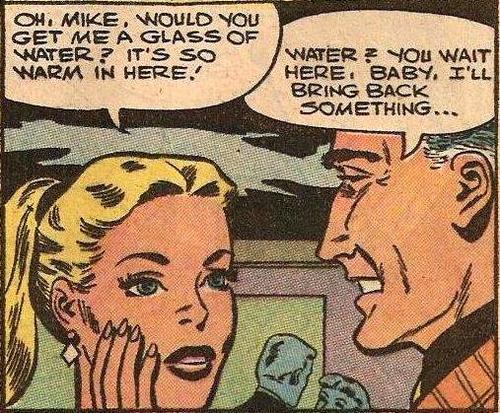
Randy Mora
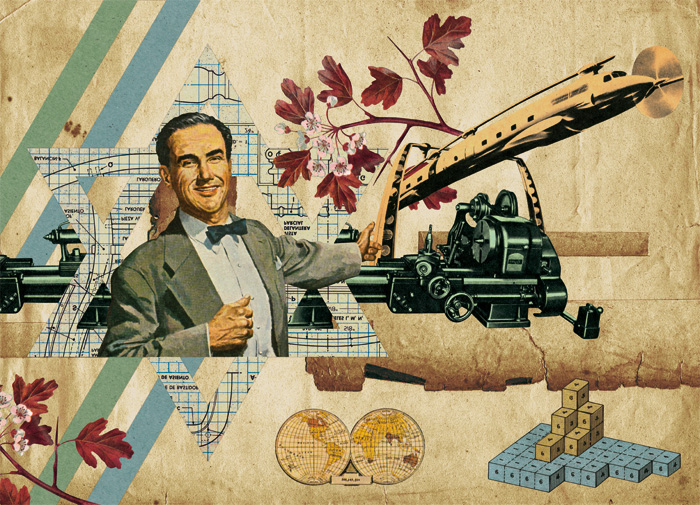
The work of Randy Mora (via Forgotten Hopes)
The work of Randy Mora (via Forgotten Hopes)
I hear this a lot, both by people in and outside the web industry.
Over at frog design’s design mind blog, they recently hit the 100,00 follower mark and explain what this milestone means. Here are a few points that stood out to me:
If there’s one truth to this milestone, it’s that a social network doesn’t exist on its own. Unless you’re a pop star with an audience already in place like LeBron James, who opened a Twitter account and got 650,000 followers in seven weeks, I believe it’s impossible to attract such a following without also having an ecosystem of complimentary initiatives in place, namely a rich and always-fresh supply of content to share, a community of actual people that you actually talk to (not just Twitter accounts), and a dedicated person or team to care for and feed the social media conversation
Why people follow them, and the responsibilty that goes with 100,000 followers:
There is a reason people continue to follow us on Twitter, just as there is a reason conferences want our magazine at their events or indeed, why people want to continue to do business with us. They trust us. If anything, reaching the 100,000 follower mark on Twitter is a reminder of the responsibility we have to be thoughtful curators of relevant news, trends, and debates, even when those debates involve our competitors.
Regarding ROI (return on investment):
Now that frog has reached 100,000 followers, we are officially considered an “influencer” by analyst firm Forrester, which means we can augment conversations on the Social Web, instantly broadcast content to a wide, relevant audience, and use that reach as an asset in our relationships with clients and conferences.
The the most negative comments I hear people make about Twitter always focus on the mundane, trivial and adolescent tweets. That’s easy, and yes, there’s plenty of dumb shit out in the Twitosphere.
But there’s also the people and companies I follow. Twitter streams I find thought-provoking, hilarious and insightful, like frogdesign, kanyewest and mullerbrockmann.
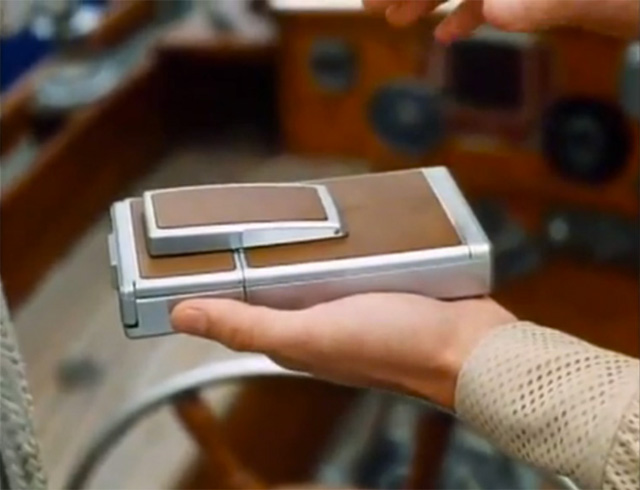
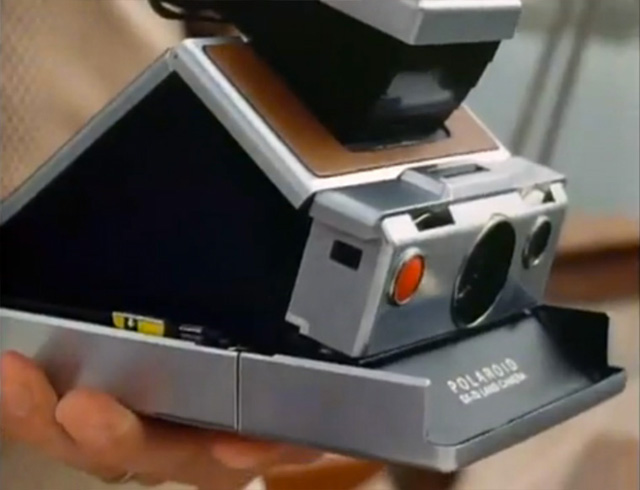
A beautiful short film by Charles and Ray Eames on the Polaroid SX-70 (via Cool Hunting)
I couldn’t help but keep my finger on trigger for screengrabs:








Found a great quote in the comments in Fast Company’s article about Alex Bogusky leaving his agency:
“They do not want to own your fortune, they want you to lose it; they do not want to succeed, they want you to fail; they do not want to live, they want you to die; they desire nothing, they hate existence, and they keep running, each trying not to learn that the object of his hatred is himself … They are the essence of evil, they, those anti-living objects who seek, by devouring the world, to fill the selfless zero of their soul. It is not your wealth that they’re after. Theirs is a conspiracy against the mind, which means: against life and man.”
—Atlas Shrugged
You guys think I’m just some untouchable peasant? Peon? Huh? Maybe so, but following a broom around after shitheads like you for the past eight years I’ve learned a couple of things…I look through your letters, I look through your lockers…I listen to your conversations, you don’t know that but I do…I am the eyes and ears of this institution my friends.
—Carl, The Breakfast Club
I’m the first one to call bullshit on all the hyperbole the press engages in on a regular basis, but even taking that into consideration, there’s definitely real upheaval going on in the computer world.
Can we give some credit to Apple and the disruption it brought into the mobile computing world in 2007? Absolutely.
Are there other factors involved beyond Apple? Absolutely.
But make no mistake – these are not isolated incidents.
.NET Journal: Is Microsoft’s Ballmer Out?
Electronista: Nokia shareholders call for CEO to resign; Palm deal ignored
SEC: over a quarter of shareholders want Dell CEO out
Whether we’re talking about mobile phone makers failing to turn their units into profitable computing platforms and not cheap throw-aways, or PC makers failing to move from desktop computers to multi-touch mobile/tablet computers, we’re seeing denial/stubborness/ignorance in the face of a changing computer world.
Steve Jobs talked about this at the D8 Conference this year (about 44 minutes into the interview):
When we were an agrarian nation, all cars were trucks, because that’s what you needed on the farm. But as vehicles started to be used in the urban centers, cars got more popular. Innovations like automatic transmission and power steering and things that you didn’t care about in a truck as much started to become paramount in cars. … PCs are going to be like trucks. They’re still going to be around, they’re still going to have a lot of value, but they’re going to be used by one out of X people.
And this transformation is going to make some people uneasy. People from the PC world, like you and me [looking at Walt Mossberg] … it’s going to make us uneasy because PC’s have taken us a long way. It’s brilliant. And we like to talk about the post-PC era, but when it really starts to happen I think it’s uncomfortable for a lot of people, because it’s change. Vested interests are going to change, it’s going to be different.
The way I see it, the PC landscape would continue on in it’s backwards-looking, non-innovative direction ad infinitum. Change is not something these entrenched giants (Dell, Microsoft, Nokia) want or are structured to create on their own. The change (erosion?) to this landscape would have happened one way or another, Apple simply sped up the process with the iPhone.
Man, Asymco is killing it these days with their mobile analyses:
Finally, looking at the pure smartphone vendors RIM and Apple, the picture is nothing short of astonishing. This before-and-after share-of-available-profit chart shows that the two entrants went from about 7% profit share to 65% in three years.
Disruption is the diagnosis here. The incumbents were caught in the headlights. Disruptive innovation leads to asymmetric competition and this is what we just witnessed. History has shown that the shift of profits is usually the last stage of disruption and is usually irreversible because the change in business models cannot happen at the rate of change of profit transfer.
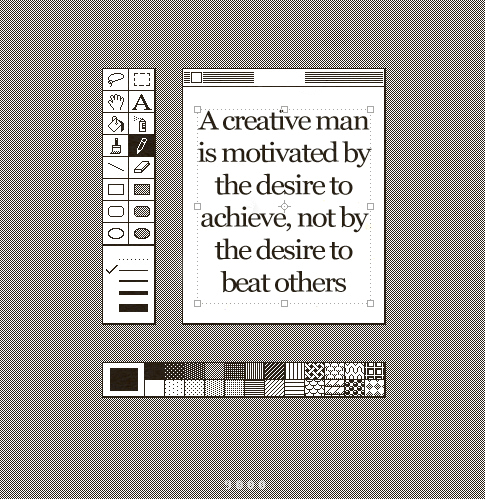
More graphic awesomeness from 9 0 0 0
Open Source and Economics: How the Hold Up Problem Explains the Flash Wars
The surprising aspect of open source is not its existence, but its success. People do things for free all the time. Among other things, there is no shortage of people willing to share their videos on the web. However, despite the availability of free videos, viewers are often willing to pay money to watch films made by professionals. Professional producers of films in turn usually make full use of copyright laws. In contrast, in many software domains, open source solutions are preferred. The important question about open source is therefore not “Why do people contribute to a project like Apache?” but rather, “Why can’t companies create proprietary products that can beat Apache on the market?”
I have no interest in seeing Rubicon (the show on AMC that’s on right before Mad Men), but the opening credits are absolutely gorgeous (created by Imaginary Forces).





Google and Verizon Near Deal on Pay Tiers for Web
Google and Verizon, two leading players in Internet service and content, are nearing an agreement that could allow Verizon to speed some online content to Internet users more quickly if the content’s creators are willing to pay for the privilege.
Such an agreement could overthrow a once-sacred tenet of Internet policy known as net neutrality, in which no form of content is favored over another. In its place, consumers could soon see a new, tiered system, which, like cable television, imposes higher costs for premium levels of service.
Remember when everyone used to talk about how the Internet was a level playing field? Where a website by John Q. Public was as easily accessible as a website by Corporation X?
Well, it looks like those days are over.
Don’t be evil, right Google? Fuck you. And fuck you too, Verizon.
NPR: Light, Fuel-Driven Car Goes For 100 Mpg X Prize
Warehouse space was cheap, so the retired race car driver hired a team of winners from the world of racing and set up shop to build a car that gets the equivalent of 100 miles per gallon. The team, called Edison2, entered its vehicle, dubbed the Very Light Car, in the X Prize competition, and it’s the last remaining four-seat sedan in the competition.
I have to agree with my father. I’m always amazed and excited, not by new technologies that emerge, but by the refining and perfecting of existing ones. Do we have to move beyond fossil fuels? Absolutely, but that doesn’t mean stories like aren’t exciting.