Hyperlinks are just fine, thank you.
PSFK, via, asks: Can The Facebook Like Button Supplant The Hyperlink?
Answer: No.
I’m really tired of hyperbolic headlines.
PSFK, via, asks: Can The Facebook Like Button Supplant The Hyperlink?
Answer: No.
I’m really tired of hyperbolic headlines.
NYT: Armies of Expensive Lawyers, Replaced by Cheaper Software
When five television studios became entangled in a Justice Department antitrust lawsuit against CBS, the cost was immense. As part of the obscure task of “discovery” — providing documents relevant to a lawsuit — the studios examined six million documents at a cost of more than $2.2 million, much of it to pay for a platoon of lawyers and paralegals who worked for months at high hourly rates.
But that was in 1978. Now, thanks to advances in artificial intelligence, “e-discovery” software can analyze documents in a fraction of the time for a fraction of the cost. In January, for example, Blackstone Discovery of Palo Alto, Calif., helped analyze 1.5 million documents for less than $100,000.
I’ve said it before and I’ll continue to – it’s amazing and sad to think we went from rich, film-based photography to the up-until-recently inferior digital photography.
These are shots from the Great Depression (1939-43):



Photos from The Denver Post (via Good Shit)
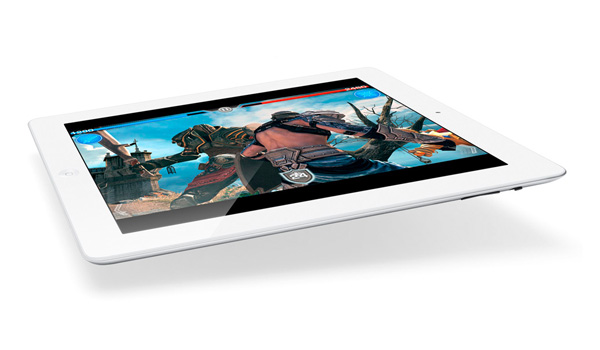
Quick thoughts on the new iPad 2 from Apple.
I was thinking about how they self-proclaimed this the year of iPad 2 and how no other company can do that due to the multi-vendor nature of the Android market.
Google simply provides the operating system, Android, to power all the mobile devices and tablets other hardware vendors make. So while Motorola could try to proclaim this the year of the Xoom, they won’t because they know they can only hope to sell a fraction of the units Apple will sell.
In addition, the names of the products change so often in the Android market, they never stick around long enough to garner a following.
Sure, hardware vendors could proclaim this ‘The Year of Honeycomb’ – but consumers will have no idea what that means. Promoting Honeycomb is calling attention to the software, so any of hardware vendor who builds devices for Honeycomb can make that claim and that’s bad, because LG, Samsung, Motorola and the rest need to differentiate themselves from each other.
This is worth repeating. It’s in Apple’s DNA that technology is not enough. It’s tech married with the liberal arts and the humanities. Nowhere is that more true than in the post-PC products. Our competitors are looking at this like it’s the next PC market. That is not the right approach to this. These are pos-PC devices that need to be easier to use than a PC, more intuitive.
—Steve Jobs, from Apple’s iPad 2 Event, 2 March 2011 (via Engadget)
From the NYTimes:
WASHINGTON — In a lively decision that relied as much on dictionaries, grammar and usage as it did on legal analysis, the Supreme Court on Tuesday ruled unanimously that corporations have no personal privacy rights for purposes of the Freedom of Information Act.
Chief Justice Roberts dropped some serious vocab on AT&T’s ass:
In addition to considering dictionary definitions for and the common usage of the word “personal” standing alone, Chief Justice Roberts said the word should also be considered in the context of the phrase “personal privacy.” Here, too, he said, “AT&T’s effort to attribute a special legal meaning to the word ‘personal’ in this particular context is wholly unpersuasive.”
“Two words together may assume a more particular meaning than those words in isolation,” he wrote, adding that “personal privacy” suggests “a kind of privacy evocative of human concerns.”
The chief justice had examples here, too. “We understand a golden cup to be a cup made of or resembling gold,” he wrote. “A golden boy, on the other hand, is one who is charming, lucky and talented. A golden opportunity is one not to be missed.”
Thanks, Bryan.
From the Financial Post:
Peter Schiff is not what you’d call a typical homeowner. He doesn’t think buying a house is generally a good idea.
At least, not for the reasons many people give when they pull the trigger: That it’s an investment. That it will gain value. That when you’re all grown up, it just seems like the responsible thing to do.
“I own a house but I don’t expect to make any money off it,” says Mr. Schiff, chief executive of Euro Pacific Capital. “I own a house like I own my car or my boat. I need a place to live and I enjoy it. And I expect it to depreciate just like all the other things that I own.”
GigaOm: Why Google Still Needs to Buy a Groupon Clone
Google is launching — or at least beta-testing — a Groupon-style discount program for small businesses known as Google Offers, something that was first reported by Mashable and then confirmed by Google in an email to Search Engine Land. The program appears to be identical to those run by Groupon or one of the dozen smaller group-buying startups, in that it allows merchants to offer a discount that only gets triggered if enough people sign up for the deal. But does Google have what it takes to build up that kind of service on its own? Probably not. Which is why the company should still think about buying a Groupon clone.
Sure, that’s all it takes. Whatever market you’re in, if you don’t have a product to use against the competition, just buy one.

via TUAW
RIM’s Jeff McDowell reacting to HP’s Jon Oakes claim that RIM is copying HP with their Playbook tablet (via LatopMag):
I feel that we set out from the ground up to define a Human Experience that we felt would delight our customers, and we landed in a place that may look like other competitive devices. But there was no intention and no preconceived notion that this is what we want to end up looking like. In fact, I think QNX had that design lined up before we even started working with them.
You know, cars over time end up looking a lot alike because you put them through a wind tunnel, and when you’re trying to come up with the best coefficient to drag ratio, there’s one optimized shape that gets the best wind resistance, right? Well, when you’re trying to optimize Human Experience that juggles multitasking, multiple apps open at once and on a small screen, you’re going to get people landing on similar kinds of designs.
I always love when car analogies end up in tech stories and I can understand McDowell’s point of view.
There’s always going to be overlap in user interfaces on computers. It happened when Steve Jobs created the Macintosh after seeing Xerox PARC’s work on the GUI, then the same thing happened when Microsoft released Windows 95, an OS heavily influenced by the Mac OS.
But as with any creative endeavor there’s a line between inspiration and duplication.
Some products in this world are revealed only after they’re finished. After every last touch has been made. Cars, books, movies and Apple products come to mind.
I treat this site more like a building being built. I’m not testing it behind some hidden subdomain on my server – I’m doing it right out in the open for everyone to see. There’s probably going to be minutes/hours/days during the year this site will look crazy, horrible or beautiful.
There’s something about the live-ness of an incomplete site that motivates me to continue to work on it, to look at it objectively and acknowledge good looking parts and crappy looking parts. I’m also a firm believer in just getting something up, then fix it.
So as they said, “We Apologize for Our Appearance.”
The scaffolding will be up, DIVs will be exposed, chunks of code will be spilled on the sidewalk … so watch your step.
TechCrunch: Android In-App Payments Coming Soon — Were Delayed Because Developers Were Busy
I don’t buy that excuse.
This comment by “MegaBert” sums it up nicely:
Google has conditioned its entire end user base that anything on the internet is free: email, Office-like applications, maps, operating systems, storage for video and photo– basically anything with a Google logo. Aside from any technical problems, this makes it difficult to sell apps or content on Android.
There might be an app for everything, but there’s also a theorem for everything, like the infinite monkey theorem:
The infinite monkey theorem states that a monkey hitting keys at random on a typewriter keyboard for an infinite amount of time will almost surely type a given text, such as the complete works of William Shakespeare.