Me, Me, Me

NYTimes: A New Generation’s Vanity, Heard Through Hit Lyrics

Now, after a computer analysis of three decades of hit songs, Dr. DeWall and other psychologists report finding what they were looking for: a statistically significant trend toward narcissism and hostility in popular music. As they hypothesized, the words “I” and “me” appear more frequently along with anger-related words, while there’s been a corresponding decline in “we” and “us” and the expression of positive emotions.

“Late adolescents and college students love themselves more today than ever before,” Dr. DeWall, a psychologist at the University of Kentucky, says. His study covered song lyrics from 1980 to 2007 and controlled for genre to prevent the results from being skewed by the growing popularity of, say, rap and hip-hop.

Categories:

Pyschology

Tags:

Uncertainty

Heisenberg’s Uncertainty Principle:

In quantum mechanics, the Heisenberg uncertainty principle states by precise inequalities that certain pairs of physical properties, like position and momentum, cannot simultaneously be known to arbitrary precision. That is, the more precisely one property is known, the less precisely the other can be known. In other words, the more you know the position of a particle, the less you know about its velocity, and the more you know about the velocity of a particle, the less you know about its instantaneous position.

Categories:

Education, Science

Tags:

Tableau

tableau_John_Kestner.jpg

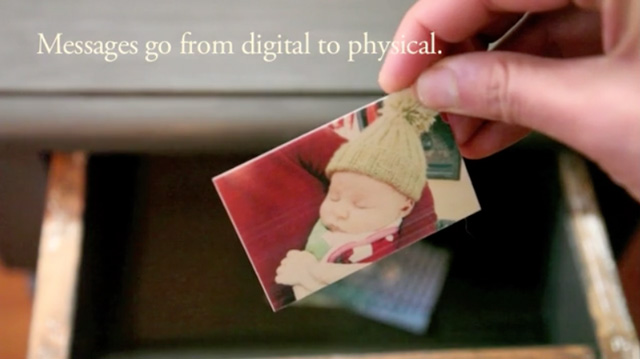
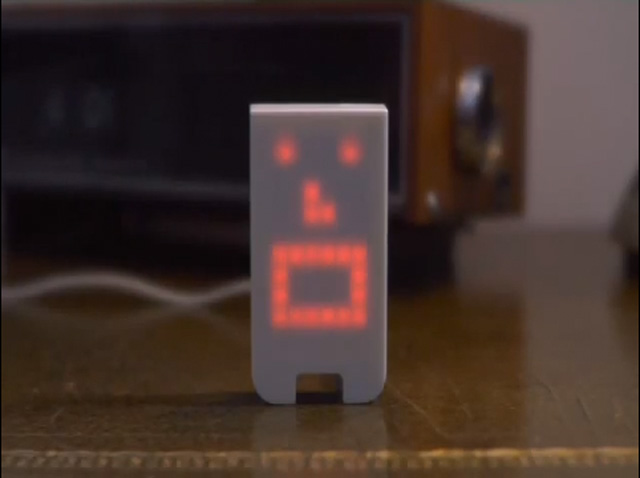
Remember when we made a connection by handing someone a photo? As our social circle spreads across a wider geographic area, we look for ways to share experiences. Technology has reconnected us to some extent, but we fiddle with too many cables and menus, and those individual connections get drowned out.

Tableau acts as a bridge between users of physical and digital media, taking the best parts of both. It’s a nightstand that quietly drops photos it sees on its Twitter feed into its drawer, for the owner to discover. Images of things placed in the drawer are posted to its account as well.

Tableau is an anti-computer experience. A softly glowing knob that almost imperceptibly shifts color invites interaction without demanding it. The trappings of electronics are removed except for a vestigial cable knob for the paper tray. The nightstand drawer becomes a natural interface to a complex computing task, which now fits into the flow of life.

Tableau by John Kestner
via Cool Hunting

Categories:

Art

Tags:

The Greatest Thing

The greatest thing by far is to be a master of metaphor. It is the one thing that cannot be learned from others; it is also a sign of genius, since a good metaphor implies an eye for resemblance.

Aristotle, De Poetica
via Frank Chimero

Categories:

Philosophy

Tags:

we have good taste

Nobody tells this to people who are beginners, I wish someone told me. All of us who do creative work, we get into it because we have good taste. But there is this gap. For the first couple years you make stuff, it’s just not that good. It’s trying to be good, it has potential, but it’s not. But your taste, the thing that got you into the game, is still killer. And your taste is why your work disappoints you. A lot of people never get past this phase, they quit. Most people I know who do interesting, creative work went through years of this. We know our work doesn’t have this special thing that we want it to have. We all go through this. And if you are just starting out or you are still in this phase, you gotta know its normal and the most important thing you can do is do a lot of work. Put yourself on a deadline so that every week you will finish one story. It is only by going through a volume of work that you will close that gap, and your work will be as good as your ambitions. And I took longer to figure out how to do this than anyone I’ve ever met. It’s gonna take awhile. It’s normal to take awhile. You’ve just gotta fight your way through.

Ira Glass
via Daring Fireball

Categories:

Career

Tags:

More Is Less

Boston Globe: Gym-Pact bases fees on members’ ability to stick to their workout schedule

Every year, we resolve to hit the gym more often and get fit. And by the end of January, many of us have missed workouts or given up altogether.

According to Yifan Zhang, a 2010 graduate of Harvard College, part of the problem is that customers see gym membership fees as money spent, or “a sunk cost, especially if you pay at the beginning of the year.” That prompted the idea for Gym-Pact in Boston, which she created with Harvard classmate Geoff Oberhofer.

Gym-Pact offers what Zhang calls motivational fees — customers agree to pay more if they miss their scheduled workouts, literally buying into a financial penalty if they don’t stick to their fitness plans. The concept arose from Zhang’s behavioral economics class at Harvard, where professor Sendhil Mullainathan taught that people are more motivated by immediate consequences than by future possibilities.

via PSFK

Categories:

Health

Tags: