Results tagged “android”

If You Can Look Past That

By Michael, May 8, 2012 11:37 AM

Abdel Ibrahim reviews the HTC One X for The TechBlock:

When it comes to Android, though, my second in-depth experience wasn't any less jarring than the first. Despite my time in the trenches with ICS on the Galaxy Nexus, HTC has slapped on so much paint with Sense that I often struggled to find my way. And what I recognized I still didn't like. Granted, I cut my teeth on iOS devices, which pride themselves on simplicity, but I refuse to believe Android couldn't be more user friendly. For all its options, there's too much clutter. But if you can look past that or are accustomed to Android, I have little doubt you'd love the HTC One X.

Translation: If you're cool with messy, shitty experiences you should love this phone.

Talk about Android apologists.

The Biggest Loser

By Michael, May 1, 2012 3:30 AM

Android Police gives us A Definitive History of Android Version Adoption (via Daring Fireball):

That's right, it's not your imagination, Ice Cream Sandwich adoption is going very, very slowly. You'll notice update percentage gets progressively slower with each new version, but keep in mind the Android ecosystem is also getting progressively larger. Ice Cream Sandwich has to deal with many, many more models than Éclair did.

Updates are getting slower.

Eclair? Ice Cream Sandwich? *burp* Let's not forget the other Android versions: Cupcake, Donut, Gingerbread, Honeycomb.

It's obvious what's going on here. Android is getting fat.

It's time Android threw on some Richard Simmons Sweatin' To The Oldies and burn some calories! Stop inhaling every new phone Samsung and HTC come out with!

Android, you can't eat away your fragmentation, eating only makes the fragmentation worse.

Forked

By Michael, April 26, 2012 5:15 PM

Technology Review on how Android device makers are 'mutinying' and forking the code to their liking:

Google's Android device makers aren't happy. They're tired of making commodity devices that are merely vehicles for Google's Android OS, each indistinguishable from the other because of Google's rules about how Android can be implemented on them in order for them to qualify as "compatible."

These makers have seen the success of devices with custom OSes built on forked versions of the still kind-of open-source Android operating system, primarily Amazon's Kindle Fire tablet, and they're itching to release their own.

Makes sense to me. Why would anyone want to be one of hundreds of different smartphones with the same OS?

The problem is, while device makers are solving the problem of differentiation in the marketplace by forking Android, they're requiring developers to make the extra effort to customize their applications to run on their custom 'flavor' of Android.

This Alan Kay quote keeps making more and more sense each day:

People who are really serious about software should make their own hardware.

Old News

By Michael, April 25, 2012 11:42 PM

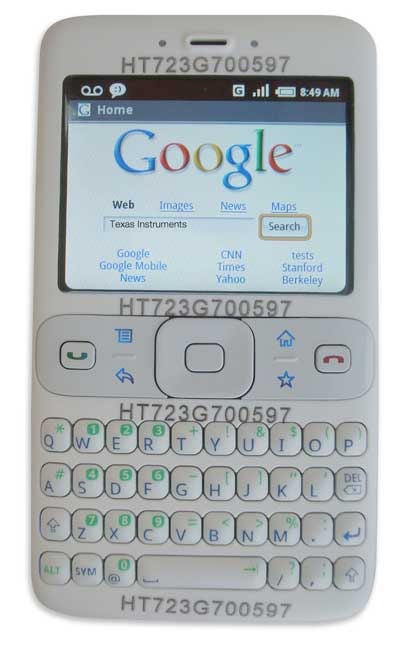
Everyone is bugging out about the original 'Google Phone' presented in 2006 that have come to light in the current Google-Oracle trial.

Any gadget geek should recall Engadget posted pictures of the actual phone -- not the rendering -- back in 2007.

Fun

By Michael, February 29, 2012 3:29 PM

After watching this video on Gizmodo, that was my reaction - Windows 8 actually looks fun to use.

Now I have no idea how many holes are in Microsoft's new OS and I hate that it goes back into classic, 'non-Metro' mode, but how awesome would it be if Microsoft wupped Google's ass in the tablet market? You know, created an operating system people wanted to use?

Because based on my first impressions of Windows 8, I'd pick it over an Android tablet without thinking twice.

The Response

By Michael, February 14, 2012 2:37 PM

Last month marked 5 years since the iPhone was first introduced.

Research In Motion has had their research in motion for the last 5 years and they've finally responded to the smartphone challenge and the current leaders in this space, Google and Apple:

blackberry_10_rim_leak_crackberry_560.jpg

You've had 5 fucking years and this is your response?

Looks lovely, but I hope they don't count on this saving their company.

Image via The Verge

It's not the car, it's where you can drive.

By Michael, January 5, 2012 10:48 AM

MG Siegler responds to the rumor Google will introduce their own Android tablet this spring:

The problem here is that Amazon is selling the Kindle Fire at or near break-even (they may even be losing money on each unit sold when you consider marketing, etc). And customers are getting what they pay for -- a tablet of significantly less quality than the iPad.

If Google is going to undercut the $199 price, the hardware is either going to be shit -- or Google is going to have to take a significant loss on each one sold. Maybe they do that and say they'll make it back in search advertising. But there is real money they're going to have to pay to an OEM to get them to agree to that.

Siegler's whole post is spot on, but what about the ecosystem this "highest quality" Android is going to live in? Eric Schmidt's quote seems to be addressing the hardware of the device. Hardware is only half the story.

It's like selling a car to someone who lives in the desert. Sure, they have a great piece of automotive technology with climate control, and power steering and satellite radio, but it's useless without access to roads and gas stations and mechanics.

This is essentially what Android tablets are today — cars in the desert.

Amazon gets this and while their car might be crappy, they at least have roads to drive on and places to go. Books, music and movies, all a few clicks away. Seamless.

Yes Google has their Android Marketplace but from most the articles I've read, it's a place where you can't make much money and the piracies rival what you'd see on a Canal Street here in Manhattan.

So for me, I could give a shit what Google releases, if they release anything, this spring. If I have nowhere to go when I drive off the dealer's lot, it's not even worth buying.

Instagram

By Michael, December 9, 2011 11:31 AM

Instagram is one of the most used applications on my iPhone. So I was happy to see Apple pick them as iPhone App Of The Year for 2011.

Nate Bolt at TechCrunch boils down Instagram's popularity to quality, audience and constraints (via Working Title).

So it pained me to read news like this one at CNet (via The Brooks Review):

"I think the advertising experience is going to be extremely engaging," Systrom said. "It's much harder with text," but Instagram offers photos, and brand names such as Audi, Kate Spade, and Burberry have joined Instagram.

The optimistic and delusional side of my brain read the CNet article in the context of the Android version of Instagram they're working on. Having advertisements on Android is a natural thing - it's how Google pays the bills. And it's how Google encourages developers to pay their bills. But there's other ways to pay the bills.

Right now Instagram is free. Maybe hindsight tells us even just charging $.99 would have been better than giving it away. Maybe charging for Instagram would have also prevented it's rise in popularity. Maybe not.

My hope is that Instagram will figure out a classy way to integrate advertising that doesn't disrupt the experience. Even better, offer a premium, ad-free version. I'd be willing to pay and I bet many others would be too.

Putting Out The Fire

By Michael, December 3, 2011 2:49 PM

Philip Elmer-DeWitt for Fortune.com on how many Kindle Fire tablets are being returned based on Amazon reviews:

There were 3,678 write-ups in all, nearly half of them (47%) glowing five-star reviews that basically said the same thing (Typical headline: "Outstanding value at $199").

What interested us, however, were the 491 (13.3%) one-star reviews. They are relevant because the number of Kindle Fires being returned to the store is likely to be an undisclosed material factor in Amazon's results this quarter

Amazon got the media ecosystem aspect right with the Fire, but as I mentioned in my brief review, everything else was a big letdown for me. But I'm also someone used to the smooth, well-thought out user interface found on iOS.

Which leads me to speculate if many of the negative reviews of the Fire are from iPad owners who have higher expectations than from people who are buying their first tablets.

Say hello to the new empire.

By Michael, November 11, 2011 3:05 PM

From Electronista:

The iPhone 4S sold out in Hong Kong even faster than previously thought, a memo from Ticonderoga Securities' Brian White indicates. The analyst claims that both the city's Apple Store and all authorized resellers sold out within a space of three hours; Apple's local online store states that there is "no supply" of the phone left. Earlier accounts had just the Apple Store selling out by lunchtime.

China isn't just going to be a huge market for Apple, but for every big company.

People who have been saying the mobile battle between Android and iOS is going to be like desktop battle between the Mac and Windows — and that Apple is going to lose again — have it all wrong.

So many variables have changed since then, it's a completely different game.

The end of Flash on mobile. Much respect.

By Michael, November 9, 2011 8:42 AM

ZDNet: Adobe ceases development on mobile browser Flash (via MG Siegler)

It was only a matter of time:

Our future work with Flash on mobile devices will be focused on enabling Flash developers to package native apps with Adobe AIR for all the major app stores. We will no longer adapt Flash Player for mobile devices to new browser, OS version or device configurations. Some of our source code licensees may opt to continue working on and releasing their own implementations. We will continue to support the current Android and PlayBook configurations with critical bug fixes and security updates.

I know. Adobe wanted to prove Steve Jobs wrong after Apple made their technical decision not to support Flash on the iPhone. Instead of seeing Steve's point of view, they decided to act like a teenage girl, screaming and crying about this atrocity. In addition to all the money they pissed away trying to shoe-horn Flash onto Android phones, they took out full-page ads saying "We ♥ Apple". Very cute.

Now here we are, four years after the debut of the iPhone and Adobe finally concedes defeat. Imagine all the money and resources they could have saved if they had managed things differently. Perhaps they could have avoided the 2,000+ layoffs they've had in the last 3 years.

I'm indulging in some schadenfreude at Adobe's expense, but it doesn't change the fact that Flash has been an extremely powerful tool which has allowed me and many other interactive designers to express ourselves and create truly immersive experiences and applications.

Even today, HTML5 still does not provide the level of granular control and fluidity that Flash does for desktop experiences.

It's necessary we as interactive professionals keep up with technologies and frameworks like HTML5, but it's also just as necessary companies like Adobe lower the barrier for entry by making tools that allow creative people to focus on creating experiences and not getting bogged down in the minutia of code.

The web is an amazing canvas to work on. If you're taking away our Flash paint brush, you have to replace it with a tool of equal power for expression.

Android - Unsafe At Any Speed

By Michael, November 6, 2011 11:11 AM

Corvair_1961.jpg

Motorola is launching an Android-based TV controller and it's called the ... Corvair?

As in the rear-engined, proned-to-spinout, Chevrolet model that Time magazine voted one of the 50 Worst Cars of All Time?

As in the car Ralph Nader included in his book, Unsafe at Any Speed?

The Verge says this is the codename, implying they'll launch with a different name. Let's hope so.

*Next thing you know, Samsung will be launching a new Android tablet called the Pinto.

Earning The Title

By Michael, October 12, 2011 9:30 PM

It's be a year since you launched Windows Phone. Where we at, Microsoft?

Horace Dediu tells us:

Windows Phone is in limbo. The company acknowledged that it has performed below expectations. During the last quarter for which we have data (ending June) I have an estimate that Windows Phone sold only 1.4 million units (Gartner's sell-through analysis suggests 1.7 million). That gives Microsoft a 1.3% share of units sold (Gartner 1.6%), a new low.

John Gruber gives us a nice translation of these numbers:

In other words, for that entire quarter, they sold about as many total Windows Phones in that quarter as Apple sold iPhone 4S preorders last weekend.

My first thought when reading this was how Microsoft has never been in this position before. They've never had to fight for the title of "Most Popular Operating System". This is a company still making most it's profits from Windows and their Office suite of applications. This is software they created decades ago and they've managed to ride the wave into the 21st century.

Back in the 80's and 90's it didn't matter if their software was shitty or great, they had a monopoly on it and because of this, had the muscle to squeeze out any scrappy, innovative underdogs.

Now Microsoft has to prove it's worth. Apple's iOS and Google's Android continue to gain momentum in the marketplace. People are voting with their wallets and so far, not many are voting for Windows Phone. On the other side of the OS, developers aren't voting for it either, unless of course Microsoft offers to pay them to develop.

Microsoft has never had to sell their products to people.

Remember, Windows was designed for businesses, not people.

For the first time in their history, they have to step into the ring and fight.

Quantity & Quality - Mutually Exclusive

By Michael, October 3, 2011 9:40 AM

Over at Fotune, Philip Elmer-DeWitt tells us iOS's Internet market share hits a record 54.65%.

He writes:

You would think that with nearly 50% of the global market for smartphones that Google's (GOOG) Android would also dominate the Web.

So how does the competition stack up?

Android, with 16.26%, is still trailing Java ME's 18.52%. Nokia's (NOK) discontinued Symbian, at 6.12%, is fading fast and Research in Motion's (RIMM) is holding steady at a negligible 3.29%.

Elmer-DeWitt points out the fact that Apple has an advantage with iPhones and iPads and iPod Touches. This is true, but I think there's another piece to this equation.

If you've opened a Best Buy flyer/insert in the last year, you'll usually see a 2-page spread of Android phones. They range from $199 to $99 to free with no recognizable differences to the average, non-techie user.

Now with over 50% of the phone share, Android is clearly kicking ass in raw numbers, but if you happen to have used some of the phones in the in range featured at Best Buy, you'll know some of them offer horrible user experiences.

Chuggy, choppy, buggy, crashy.

So my theory on why Android has over 50% market share but only 16.26% Internet market share is: People are getting suckered into buying these Android phones ("hey, they look slick like the iPhone"), not understanding there's a huge difference in quality between models. Then they start to use their phone, only to realize it sucks. People don't like their Android phones, so they stop using them.

I was in the car with a good friend of mine recently and I handed him my iPhone 4 to help me navigate to our other friend's house. He started flicking around the Google Map, and said "Oh my god, this interface is so smooth." He happened to have an Android phone on the lower end of the quality spectrum and was only now coming to understand what he had bought.

Quality and quantity are mutually exclusive characteristics.

Eye Opener

By Michael, August 30, 2011 8:26 PM

This post by Nick Farina (via Daring Fireball) was a huge eye-opener for me on Android. He breaks down all the differences between Android and iOS, from dev environment to debugging to UI design tools, but the section on Animation was what slapped me in the face.

How Android deals with interactions (emphasis added):

If you pressed the Down key, you would expect the "Homepage" entry to be selected instead of "Go to." So you press the Down key. This causes an "invalidate," meaning, "please repaint the screen." So the screen is cleared, then:

  • The OS redraws the status bar at the top
  • The WebView redraws the Google.com website
  • The Menu draws its translucent black background and border
  • All the menu text is drawn
  • The blue gradient highlight is drawn over "Homepage."

This all happens very quickly, and you only ever see the final result, so it looks like just a few pixels have changed, but in fact the whole screen must be reconsidered and redrawn.

If this sounds familiar, it's because this is the basic method used in GDI, the rendering system introduced with Microsoft Windows 1.0. That sounds damning, but really most GUIs operated this way.

Wow.

Let's see how iOS handles things:

When you're using an iPhone, you're playing a hardware-accelerated 3D game. You know, the kind of 3D where everything is made out of hundreds of little triangles.

When you flick through your list of friends in the Contacts app, you're causing those triangles to move around. And there's a "camera," just like a 3D shooter, but the camera is fixed above the Contacts app's virtual surface and so it appears 2D.

Which is a long way of saying that everything on iOS is drawn using OpenGL. This is why animation on iOS is so hopelessly fast. You may have noticed that -drawRect is not called for each frame of an animation. It's called once, then you draw your lines and circles and text onto an OpenGL surface (which you didn't even realize), then Core Animation moves these surfaces around like pulling on the strings of a marionette. All the final compositing for each frame is done in hardware by the GPU.

So when things just never feel quite as smooth as on iOS, there's a reason. I wonder how much of this is relevant to webOS? Based on the chugginess of the UI in my few weeks of testing the TouchPad, I wouldn't be surprised if it was.

As Nick mentions, Android began pre-iPhone. Horace Dediu of Asymco argues Google created Android as a defensive move to protect their existing revenue streams. They weren't thinking about the future. The opposite was the case for Apple, they created the iPhone (and iOS) to create a new revenue stream. It was yet another chance to define what the future of mobile computing should look like.

RIM, Buy Yourself A Clue

By Michael, June 30, 2011 1:52 PM

A "high level RIM employee" shot off an open letter the co-CEO's of RIM pleading for them to get their heads out of their asses (in so many words). Although the points this person makes I've read elsewhere and thought myself, it's still sound advice:

Rather than constantly mocking iPhone and Android, we should encourage key decision makers across the board to use these products as their primary device for a week or so at a time -- yes, on Exchange! This way we can understand why our users are switching and get inspiration as to how we can build our next-gen products even better! It's incomprehensible that our top software engineers and executives aren't using or deeply familiar with our competitor's products.

I also enjoyed the comparison of RIM's SDK to a "rundown 1990′s Ford Explorer". Odd choice of vehicle, but it works. I would have picked something uglier, like a 90's Buick Skylark. My coworker Victor suggested a 90's Chevrolet Cavalier.

I like this game

By Michael, May 9, 2011 8:17 AM

From a comment on Phillip Greenspun's review of the Motorola Xoom (via Daring Fireball):

I invented a drinking game a while ago. For any article or other written piece about Android, take a drink if any of the following are in the article:

"Open" (take two hits for this one)

"expected to..."

"soon"

"when ____ arrives..."

"will be able to when..."

"update will enable..."

"in the next few ____..."

I have noticed many people seem to be less fans of Android and more anti-Apple. Microsoft is barely hanging on with its phone OS and they're nowhere to be seen in the tablet game, so PC people have nowhere to go but Android, with all it's inconsistencies and excuses - like why having Flash is great, except Flash doesn't always perform great.

extraordinary claims

By Michael, April 29, 2011 8:05 AM

asymco: Calling the end of innovation in mobile computers

People are lining up to call the market for mobile phones. Analysts and amateurs alike are connecting points on charts and predicting with confidence the future of mobile platforms. Consensus is forming that there is no future but a quiescent state. By the acclamation of pundits, the survivors are declared to be iOS and Android. They are also predictably arranged in a way similar to OS X and Windows. End of story.

Except for one thing.

3.5 years ago neither of these platforms existed. In fact, it was only two and a half years ago, in mid 2008, that one of the finalists even became a platform with the launch of an app store. The other "winner" only launched in a handset later that year and had no significant volumes until a year ago. In other words, these suddenly predictable platforms have been in existence for less than the life span of one device that runs them.

Have I mentioned how fucking useless analysts are?

Must be nice to have a job that revolves around guessing about the future.

It takes much larger balls to bet the future on a product you actually have to build and sell.

preventative versus corrective

By Michael, March 9, 2011 8:14 AM

Ars Technica: Google frags fragmentation with Fragments API for older Android versions

In a post on the Android developer blog, Google has announced the availability of a new static library for Android developers that provides a more portable implementation of the Fragments API. This will allow third-party Android application developers to take advantage of Fragments without having to sacrifice backwards compatibility with existing Android handsets.

This brings to mind the difference between preventative and corrective healthcare. The United States has been seeing a diabetes epidemic with more and more people being diagnosed with it each year. The reaction to this is just that - to react with corrective treatment. One way to respond to this problem is reducing the amount of corn-based products on the shelves of our super markets so people don't grow to be so fat, putting them in the high-risk category.

Google's Android platform is becoming fragmented across the various hardware units it's being deployed on and they too are reacting. Perhaps a better approach would be to design a more scalable system less prone to fragmentation. As it stands now, Android phones being built by various hardware manufacturers have different screen resolutions, proportions and hardware button configurations.

Apple solved this problem not only by controlling both the software and hardware, but to limit the number of different hardware configurations. All iPhones and iPod Touches feature the same screen proportions (they were all 320x480 pixels prior to the iPhone, which has double the resolution - 640x980 pixels).

We can't future-proof everything, let alone technology, but a little design thinking can go along way.

The Year of iPad 2

By Michael, March 2, 2011 3:30 PM

the_year_of_ipad_2.jpg

Quick thoughts on the new iPad 2 from Apple.

I was thinking about how they self-proclaimed this the year of iPad 2 and how no other company can do that due to the multi-vendor nature of the Android market.

Google simply provides the operating system, Android, to power all the mobile devices and tablets other hardware vendors make. So while Motorola could try to proclaim this the year of the Xoom, they won't because they know they can only hope to sell a fraction of the units Apple will sell.

In addition, the names of the products change so often in the Android market, they never stick around long enough to garner a following.

Sure, hardware vendors could proclaim this 'The Year of Honeycomb' - but consumers will have no idea what that means. Promoting Honeycomb is calling attention to the software, so any of hardware vendor who builds devices for Honeycomb can make that claim and that's bad, because LG, Samsung, Motorola and the rest need to differentiate themselves from each other.

1

Daily Exhaust is hosted by DreamHost, powered by Movable Type with Minted statistics.