
Kickstarter Pitfalls
After raising $1 million, the super-thin CST-01 watch won’t make it to Kickstarter backers:
Nearly two years after “the world’s thinnest watch” was supposed to arrive to Kickstarter backers, the project has announced that it’s pretty much done for. It’s a disappointing update in the long saga of the $1 million campaign for CST-01, what was once supposed to be a stylish, 0.80mm-thick E Ink bracelet that displayed the time. The CST-01 project has been detailing its troubles for a few months now, but last week it informed backers that it no longer expects to fill all preorders or to find another company to take over production. It now expects to either liquidate all remaining assets or, if unable to find buyers, open up all designs and distribute and sell off as many remaining parts as it can.
After funding two Kickstarter projects (here and here) I can tell you these are the most important things to remember:
- Do as much work up-front as possible—don’t just prototype your project
- lock down a manufacturer you can partner with if your project gets funded
- calculate the manufacturing costs for the minimum product volume and factor that into your funding goal
- calculate all supply costs
- calculate shipping costs
- factor Kickstarter’s 5% cut
- factor the 3-5% payment processing fee
- don’t make your product at a loss—charge what it costs to manufacture plus a reasonable profit margin
I had to do a lot of preparation before I launched my most recent Kickstarter project. See, getting the money is the easy part. It really is. I’m not saying that because I think money isn’t important. If you produce a great video about a great product idea with great photography and desirable reward tiers, that money will come rolling in.
The catch is, once that pile of money comes in, you have to make it last. You would do best to address all the bullet points above once, twice—shit, make it three times.
I was only dealing with paper and ink with my projects. Producing e-ink watch bands is a whole other world.
Part of the Problem

—David Sedaris, Lets Explore Diabetes With Owls
It’s National Martini Day
Illusions in Product Design
Turns out Beats headphones have weights in them to make them feel more premium (even though they’re shit):
One of the great things about the solo headphones is how substantial they feel. A little bit of weight makes the product feel solid, durable, and valuable. One way to do this cheaply is to make some components out of metal in order to add weight. In these headphones, 30% of the weight comes from four tiny metal parts that are there for the sole purpose of adding weight.
You can achieve this in the opposite way too: use a premium material, like metal, but try to make it weight as little as possible.
Podcasting Turns 10
Apple introduced podcasting to iTunes 10 years ago this month.
Prior to that, when someone wanted to cast a pod, they didn’t know how to.
My friend Byran and I have been casting pods for a little over a year on a semi-regular basis on Weekly Exhaust. Sometimes talking continuously for an hour isn’t as easy as it seems but I think we’ve gotten a lot better at it. It’s actually kind of fun.
After we finish our Skype call, I take the audio files into Garageband and edit them. For a while I was starting each episode with the sound of the exhaust from a classic car, now it can be anything: an old FM radio clip from the 60s or a piece of dialog from a movie we talk about on that episode.
In way, it brings me back high school, when I used to make mix tapes for myself or a girlfriend. I didn’t just slap songs back to back and call it a day. No, I had figured out how to hook up my VCR into my stereo so I could put snippets of movie dialog between each song (listen to the soundtrack to Pulp Fiction to get an idea of what I’m talking about).
Weekly Exhaust is also the only podcast I know that updates it’s cover art every episode (not that I’ve listened to every single podcast).
Cheers to podcasting.
Nokia, You Never Had a Chance
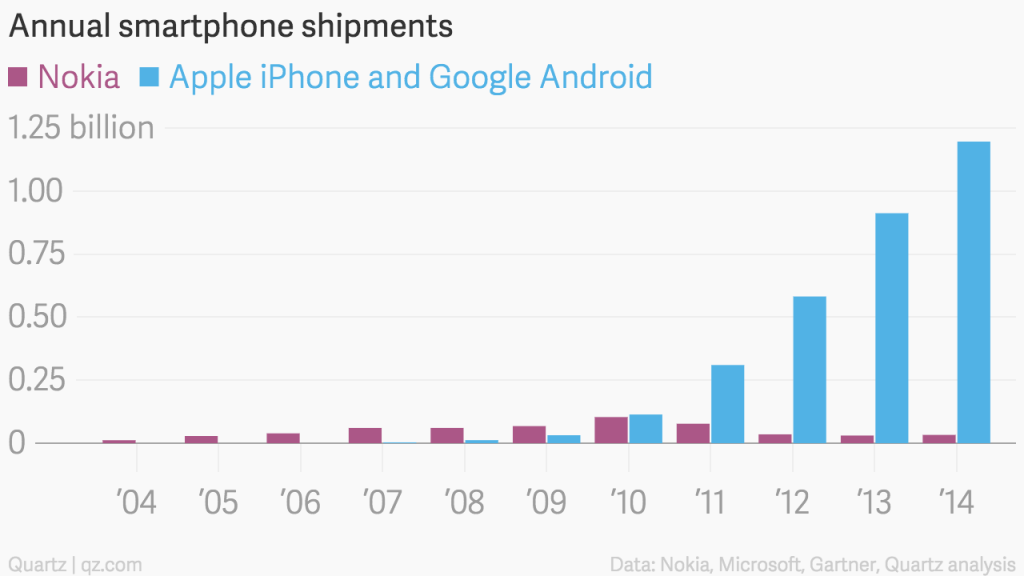
The Rise and Fall of Nokia in One Chart
…and they plan to design and license smartphones again in 2016 when their agreement with Microsoft expires?!
LOLZ. U guys r funny.
Good luck with that.
Time Is Money
The Telegraph, reporting on the reaction of indie UK record labels on Apple Music’s terms:
Apple is accused of attempting to launch its new Spotify rival, Apple Music, in a way that would leave Britain’s independent record labels “completely screwed” and struggling to survive.
The Silicon Valley giant is demanding that record labels such as XL Recordings, the home of Adele, and Domino, the label behind the Arctic Monkeys, agree to a free three-month trial of Apple Music, during which they will receive no payment.
The plan, only disclosed since the service was unveiled in at a glitzy event in San Francisco last week, has caused dismay among British labels, according to Andy Heath, the chairman of UK Music, the industry lobby group.
Doesn’t seem fair to me. Three months is a long time to not get paid and time is money.
Design, Don’t Develop
Jesse Weaver says we don’t need more designers who can code:
Saying designers should code creates a sense that we should all be pushing commits to production environments. Or that design teams and development teams are somehow destined to merge into one team of superhuman, full-stack internet monsters.
Let’s get real here. Design and development (both front end and back end) are highly specialized professions. Each takes years and countless hours to master. To expect that someone is going to become an expert in more than one is foolhardy.
Here’s what we really need: designers who can design the hell out of things and developers who can develop the hell out of things. And we need them all to work together seamlessly.
This requires one key element: empathy.
What we should be saying is that we need more designers who know about code.
A-FUCKING-MEN.
Ten years ago I had decent front-end development chops, but I eventually came to terms with the fact that I was not a developer and would never be one. I’m a designer (who happens to have an aptitude for technical things).
I know about conditionals and loops and arrays and variable typing, but I use it to talk with developers, not to write my own code.
Talk to Me
Last Week In New York Was Great
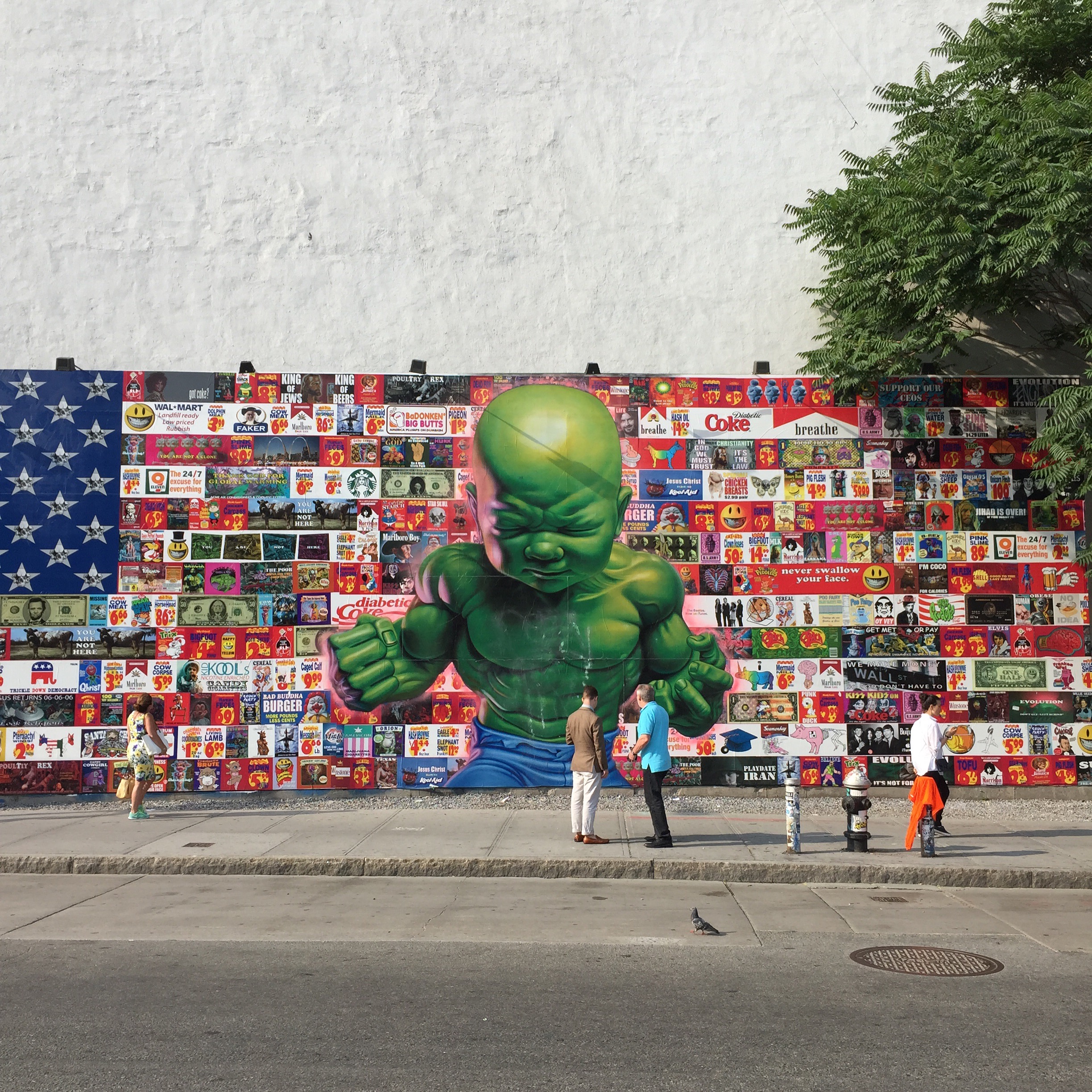
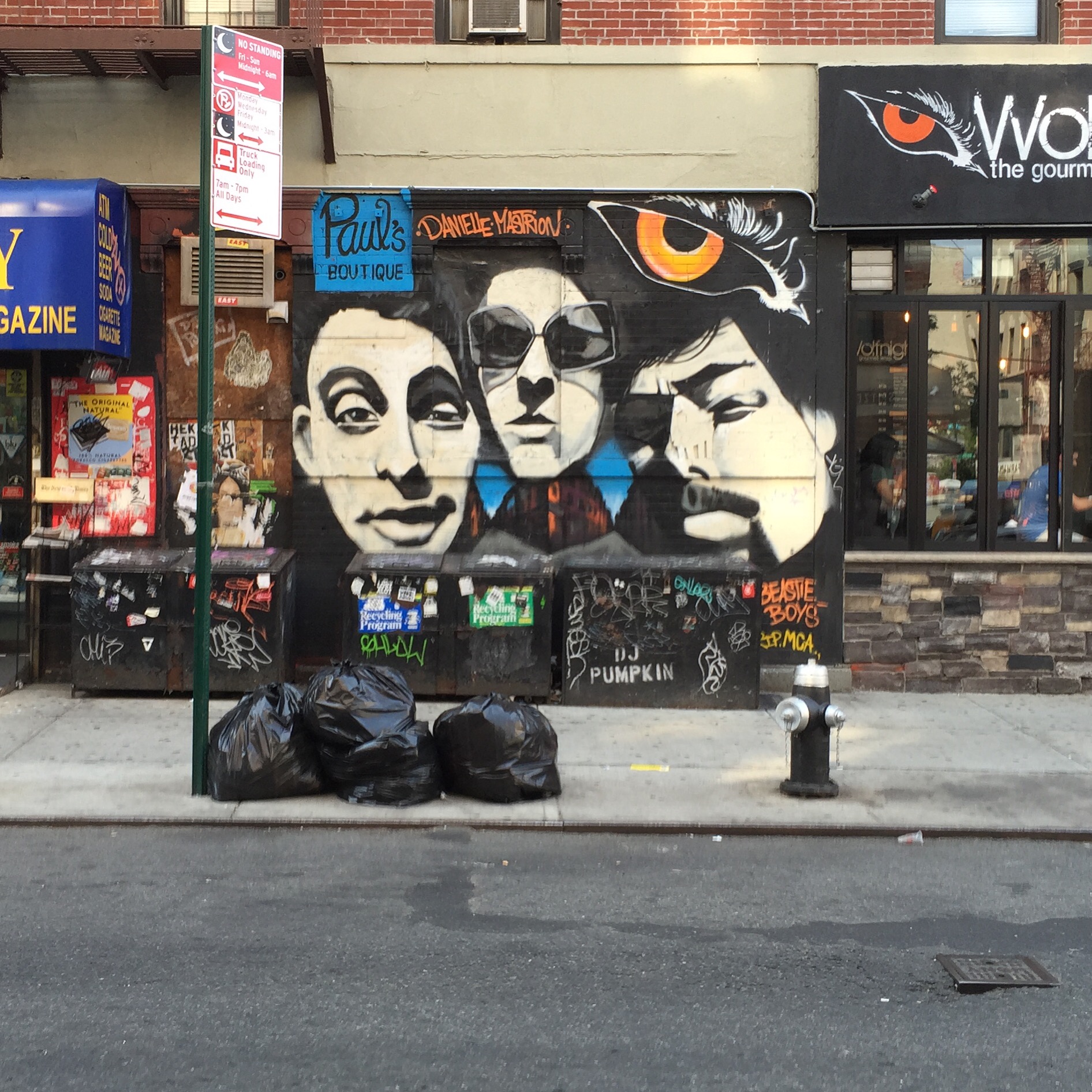




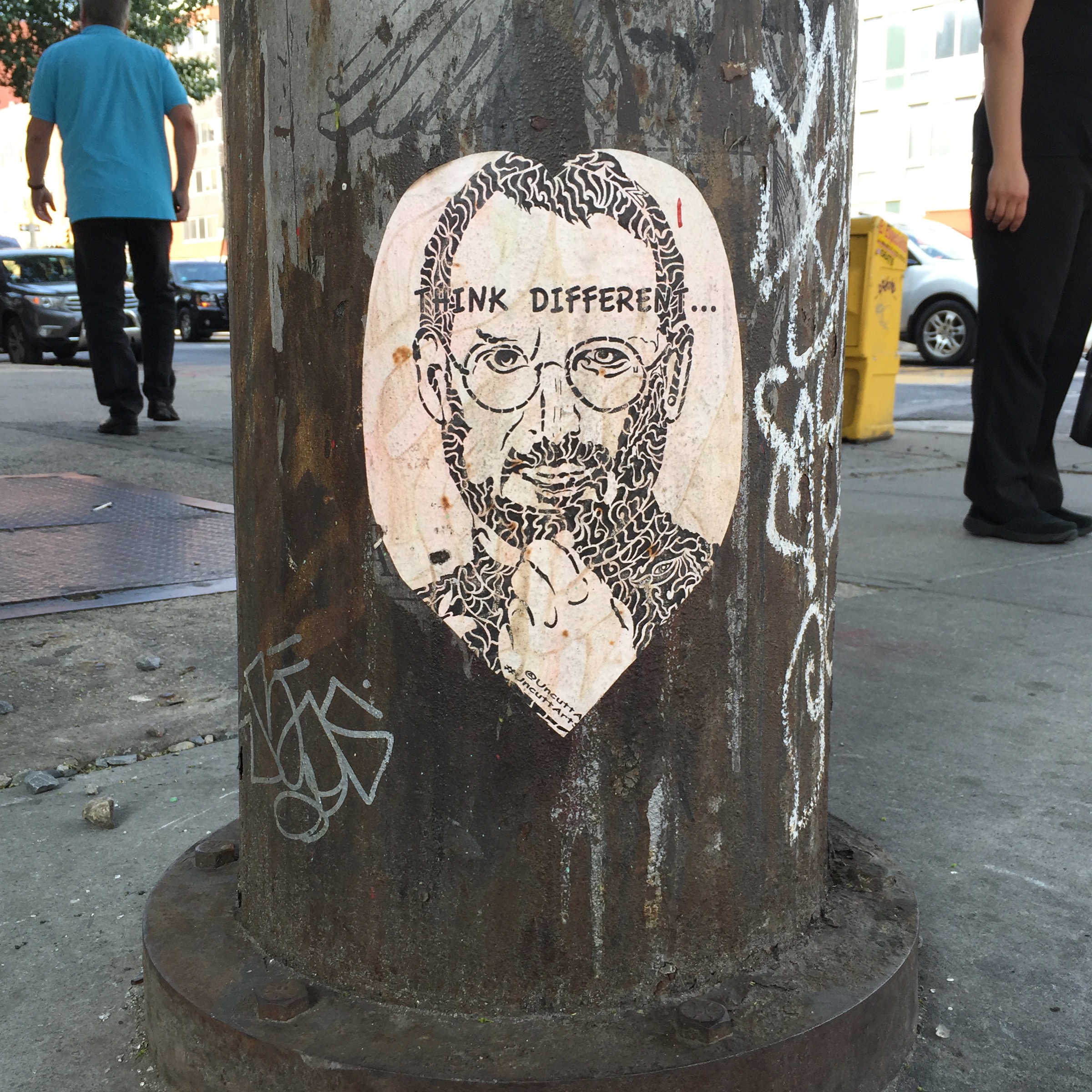
Mikey’s the Big Winner
Paying For ‘Free’
The privacy costs involved for consumers who pay for ‘free’ services by consenting to invasive surveillance of what they say, where they go, who they know, what they like, what they watch, what they buy, have never been made clear by the companies involved in big data mining. But costs are becoming more apparent, as glimpses of the extent of commercial tracking activities leak out.
And as more questions are asked the discrepancy between the claim that there’s ‘nothing to see here’ vs the reality of sleepless surveillance apparatus peering over your shoulder, logging your pulse rate, reading your messages, noting what you look at, for how long and what you do next — and doing so to optimize the lifting of money out of your wallet — then the true consumer cost of ‘free’ becomes more visible than it has ever been.
Sagmeister Strikes Back
“The history of the album cover is so much richer and so superior to the history of the film poster,” Sagmeister told Dezeen. “The average film poster basically takes its strengths from being attached to some cultural phenomenon.”
“People like the Star Wars poster because they like the film,” he continued. “But the poster itself is ultimately a piece of shit. It’s a realistic illustration with some typeface on it related to what’s happening in the film.”
—Stefan Sagmeister talking to Dezeen