Moving Colors

via Colossal
via Colossal
Interesting look behind-the-scenes at Chris Lindland’s company, Betabrand:
When San Francisco saw yet another influx of tech workers a few years ago, Betabrand was in a position to capture a new audience – an audience that lived on the internet, enjoyed its wacky bent, and was seeking a kind of practicality and comfort that wasn’t being addressed by other clothing companies. This was around the same time that Facebook, Zynga, LinkedIn, and Yelp were gaining tons of attention for their huge IPOs. In the spirit of maximizing press potential, Lindland created the Executive Hoodie, a hooded sweatshirt made out of pinstriped blazer material, an official sport coat of Silicon Valley, and launched it concurrent with Facebook’s IPO in 2012. Its tongue was both firmly in its cheek and sticking out at the rest of the tech world. Subsequently the company started to specialize in what it calls West Coast Workwear: Bike to Work Pants, to ease a cycling commute with a “slightly higher back rise that is optimal for crack-coverage”; Dress Pants Sweat Pants; Sons of Britches, pants for the “amateur stuntman lifestyle”; and a Ping Pong Polo shirt, for the type of people who have a ping-pong table near their workstation because they don’t want to seem so stuffy that they go to an office, or so square that they have to put on big-boy dress-up clothes.
Betabrand is filling a void in the current fashion and retail landscapes. It’s a great position to be in.
Over at Forbes, Ewan Spence on the pricing of the Samsung S6 and Galaxy S6 Edge:
Pricing details around Samsung’s Galaxy S6 and Galaxy S6 Edge are starting to come out, with an expected street price in the UK of £550 for the SIM-free Galaxy S6 (and £650 for the Galaxy S6 Edge). While these prices are unconfirmed, they are higher than the entry-level competition of the iPhone 6 and iPhone 6 Plus.
Arguably the price difference could come down to Samsung running with 32 GB of storage compared to the 16 GB Apple has fitted to the iPhones, but I do like the idea of Samsung exploiting a higher price than Apple. If the Galaxy S6 and Galaxy S6 Edge handsets turn out to be more expensive than the Apple iPhone 6 and iPhone 6 Plus, then Samsung will have some powerful arguments available to help sell the device.
Spence “likes the idea of Samsung exploiting a higher price than Apple.”
That’s cute.
Wait, Spence has more brilliance in his brain to share:
Now the Galaxy S6 and S6 Edge have the advantage Samsung should push hard on the specifications battle. That will be helped by Apple essentially ducking the numbers fight, so Samsung should be able to play hard on the fact that the S6 is a more powerful phone with more features.
And the easiest way to say that a phone is ‘better’ than another phone is to be more expensive.
Is that the easiest way to say ‘better’? Just make it more expensive? Maybe Toyota should try that with their Corolla. Just add $10K to the price tag.
Premium pricing only works if your brand is perceived at premium and this perception is controlled by people who buy your products, not the company making them.
I don’t think this will prove a winning strategy for Samsung, but since they’re clearly in the game to copy everything Apple does, fuck it. Go for it, Samsung.
Dan Weiden (of Weiden & Kennedy) on the genesis of Nike’s slogan:
“I was recalling a man in Portland,” Wieden told Dezeen, remembering how in 1988 he was struggling to come up with a line that would tie together a number of different TV commercials the fledgling agency had created for the sportswear brand.
“He grew up in Portland, and ran around doing criminal acts in the country, and was in Utah where he murdered a man and a woman, and was sent to jail and put before a firing squad.”
Wieden continued: “They asked him if he had any final thoughts and he said: ‘Let’s do it’. I didn’t like ‘Let’s do it’ so I just changed it to ‘Just do it’.”
I know innovation is all about recontextualization, but man.
Apple has posted their Human Interface Guidelines (HIG) for Apple Watch:
Personal. Because Apple Watch is designed to be worn, its UI is attuned to the wearer’s presence. A raise of the wrist shows the time and new alerts. Digital Touch–particularly its Heartbeat and Sketch features–enables new types of personal communication. An accelerometer and a heart rate sensor provide personalized information about the wearer’s activity from day to day. No other Apple device has ever been so connected to the wearer. Be mindful of this connection as you design apps for Apple Watch.
Just as the iPad marked the beginning of the “Post-PC Era”, the Apple Watch is marking the beginning of the “Post-Smartphone” or “Smartphone+1” Era.
The smartphone might still be the star of the mobile computing show, but it now has to share the stage with the tablet and the watch. Wearing a watch that’s tethered to your phone changes the relationship of how you interact with both of these devices.
Digital designers, UI designers, UX designers, web designers–I don’t give a fuck what you call yourselves–you best familiarize yourselves with the Apple Watch HIG.
It doesn’t matter if you hate the Apple Watch, or love the Apple Watch or never plan to wear one. Not making an effort to understand wearables will put you at a severe disadvantage as a designer.
Netflix Ups the Stakes With Big ‘Beasts of No Nation’ Deal (via ParisLemon):
“As Netflix gets bigger, it will be harder to economically outbid them for any title,” says media analyst Mark S. Mahaney, with RBC Capital Markets. “They have the largest indie audience. They have the largest arthouse audience. They have the largest teenage werewolf audience. That puts them at a real advantage.”
Achieving top-dog status is costly. Tony Wible, an analyst with Janney Montgomery Scott, estimates that Netflix will spend $5 billion in programming next year, more than anyone save ESPN. It also eclipses the $4.5 billion that rivals Amazon, HBO, Starz and Showtime are estimated to have shelled out in combined spending in 2014.
The question you have to ask yourself: Are you a creator of content or a creator of tools that distribute and connect and if you’re a creator how are you going to distribute your content?
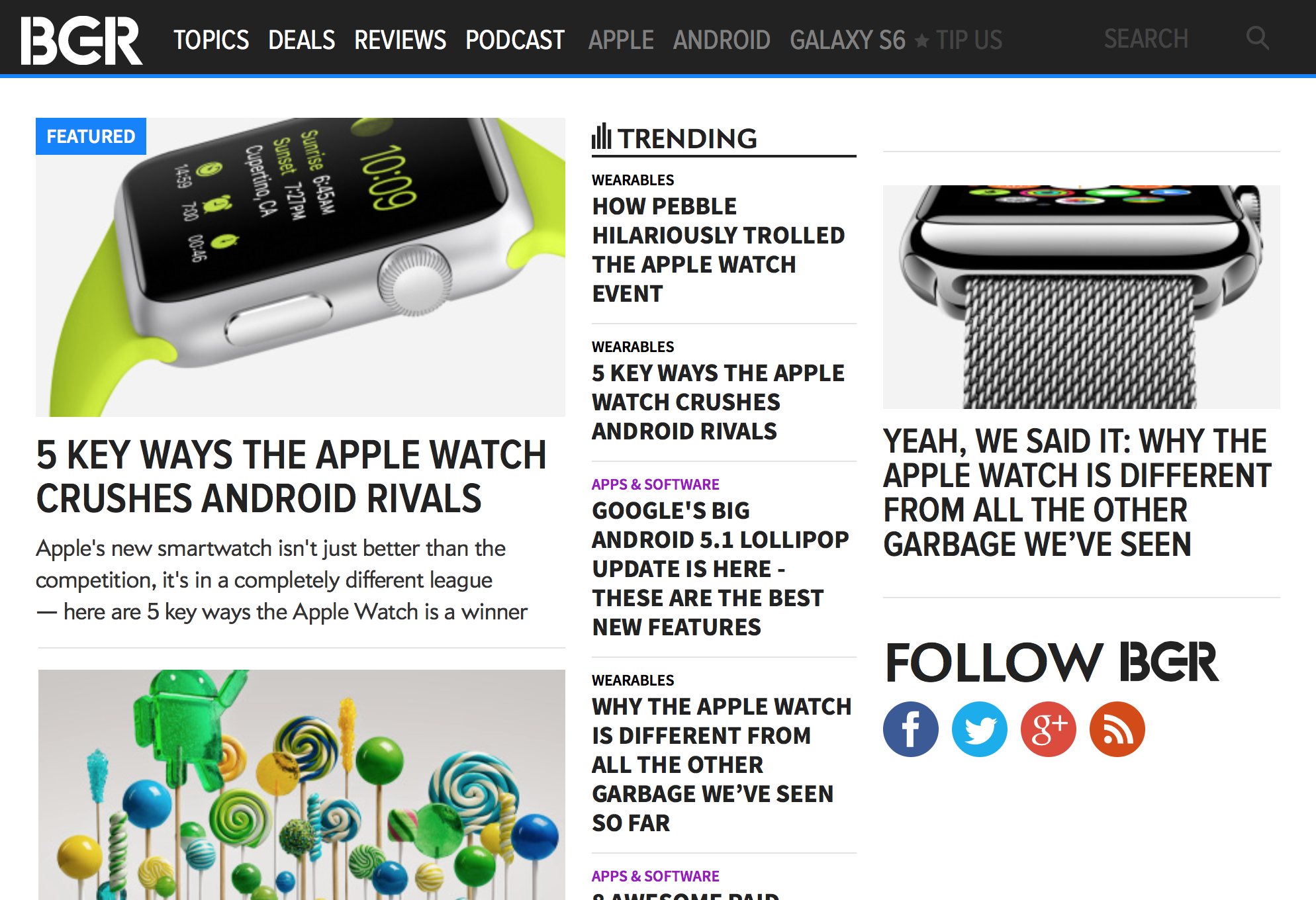
The other day BGR posted this animated GIF of Apple’s website from the late ’90s (based on my digging on archive.org, I’d say 1998):
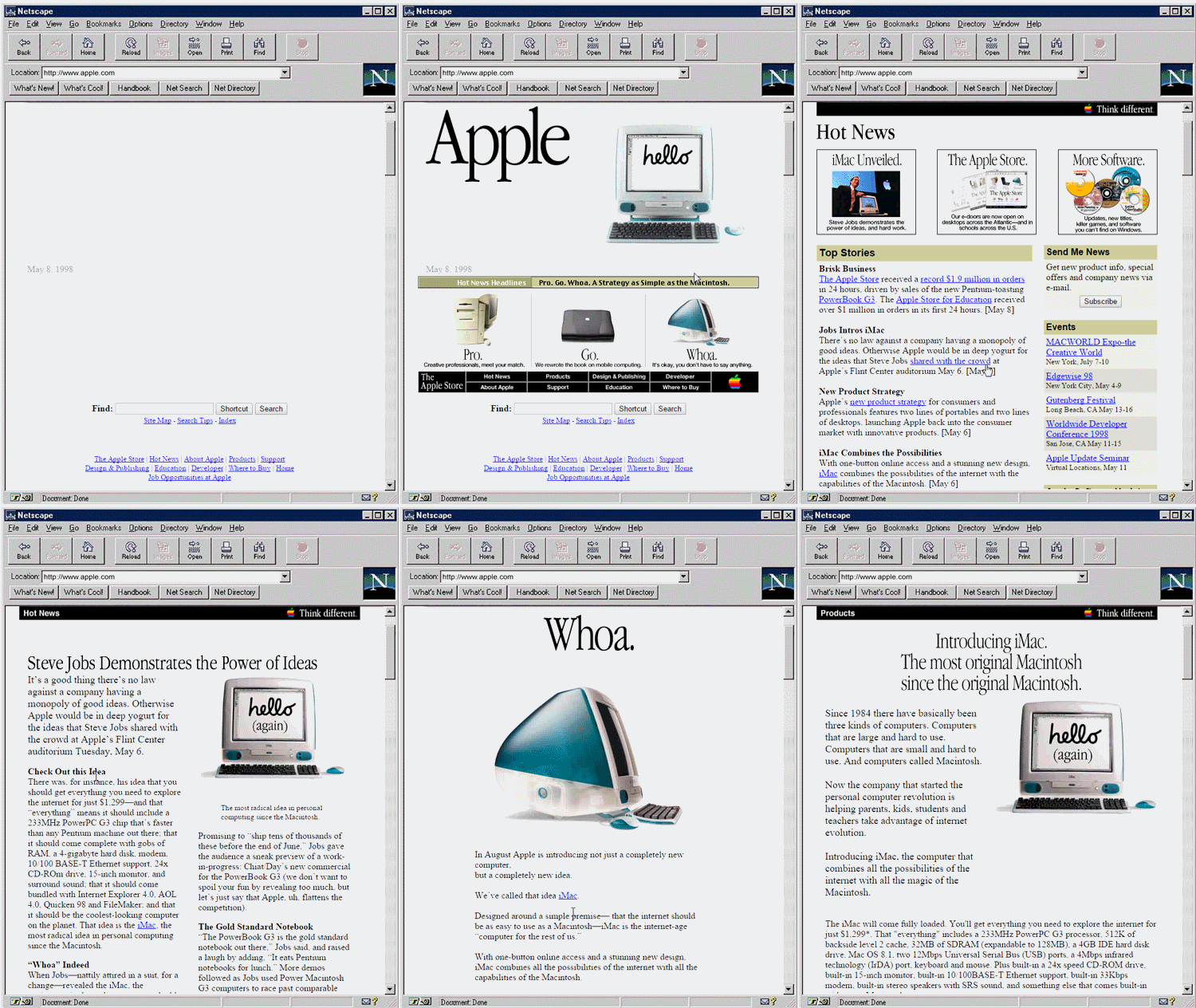
This is what they said (my emphasis):
Apple has come a long way since the dark days of the mid-’90s, when it very nearly went bankrupt. And if you want to see just how far Apple has come, then you need look no further than this awesome GIF posted on OpenUniversity.edu that has preserved Apple’s website exactly as it looked in 1997. As you’ll see below, the company’s main page has undergone a pretty drastic overhaul in the past 18 years, and it’s all been for the better. Yes, screen resolution has changed. Yes, browsers have gotten better.
Yes, Apple’s productions have evolved.
But has their website “undergone a drastic overhaul”? Not from what I see. I see a website structure that’s pretty consistent with today’s Apple.com in 2015:
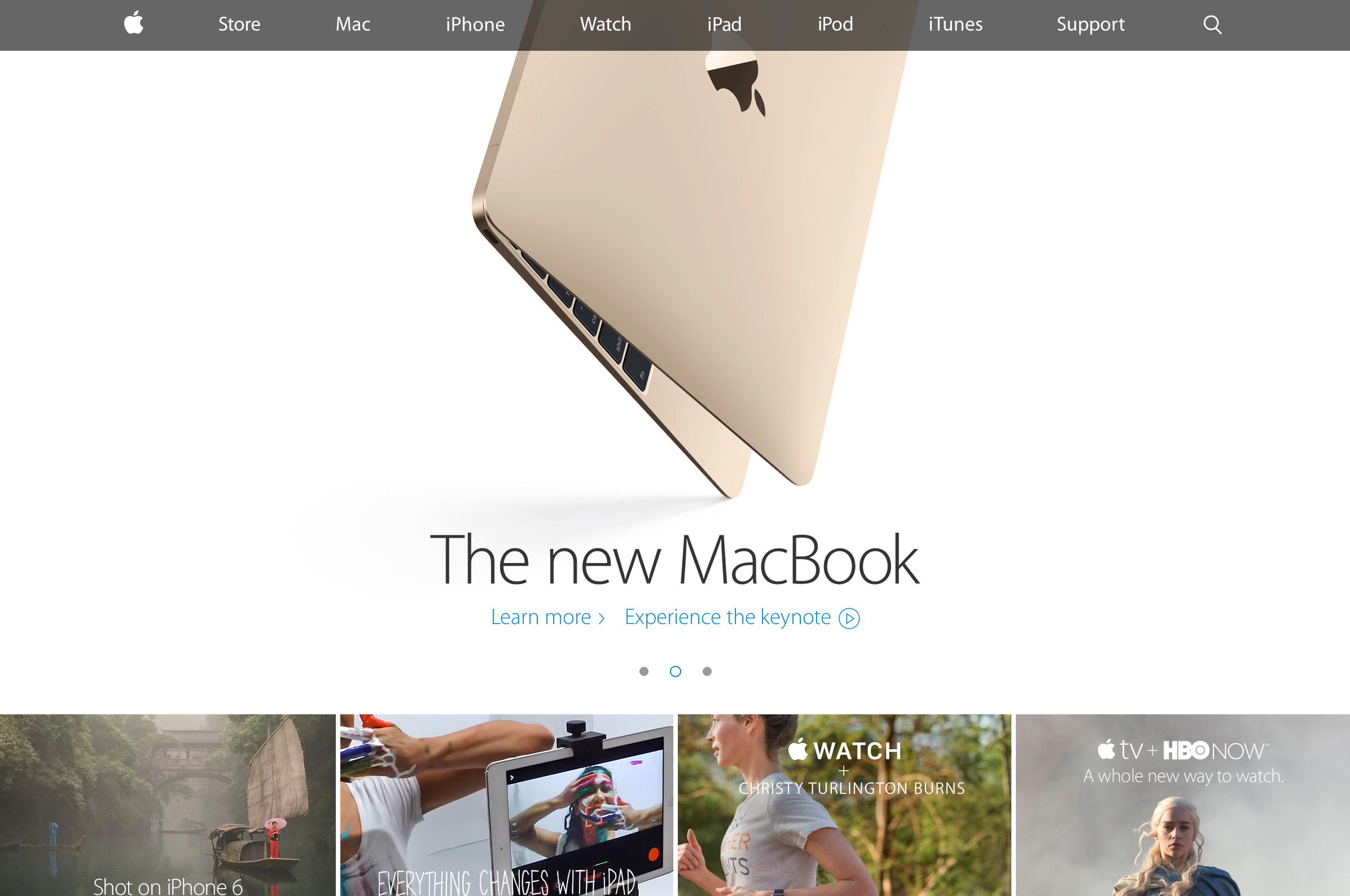
Ok, there’s 4 modules under the main carousel, not three. So sorry.
Patek Philippe Chairman Thierry Stern on the Apple Watch:
“When you are buy a Patek Philippe, you buy a timeless piece of art. It would be as if you told people to no longer buy paintings but TV screens projecting the image of a painting.”
Stern also said he believed many consumers would prefer wearing a traditional watch with a suit or a black tie, rather than a smartwatch. He clearly doesn’t get it.
We don’t know yet if the Apple Watch will be a success, but don’t come crying when Apple starts drinking your milkshake, Thierry.
via DrewBot
via Lifehacker
Art has squarely met science in the modern practice of digital marketing, ushering in new forms of collaboration among marketers, agencies and technologists. Successful campaign execution now requires as much deftness with data and analytics as it does with creative and media planning disciplines.
This approach isn’t entirely new, however.
For decades, marketers have used consumer insights to inform creative and communications strategies, and relied on data signals to understand, target and measure audience reach. This is still true today, but with a twist: the shift towards auction-based buying of media formats such as search and video and automated trading of display media, has moved the industry to data-driven, technology-centric planning and buying modes.
But:
All this is not to say that human skills – such as judgement, creativity, storytelling – are any less vital to a great advertising campaign. Quite the opposite. Understanding people’s motivations, discerning consumer insights, creating compelling messages and delivering them across multiple channels and devices at appropriate intervals remain fundamental inputs to successful marketing communications.
—Eileen Naughton, Mad men, meet the algorithm: the art and science of modern marketing
When you launch a new product how it works is important (duh), how it looks is important, and how you photograph it is also very important.
You want your product to go viral, so make it as easy as possible for this to happen. This is where your product photography can help.
Your product photography is not just important on your website and promotional materials. It’s also important to all the people and news outlets you want talking about your product. Great photography increases your odds of them talking about it. Your great photography makes all the blogs and news sites look better. Give them images they can “steal”.
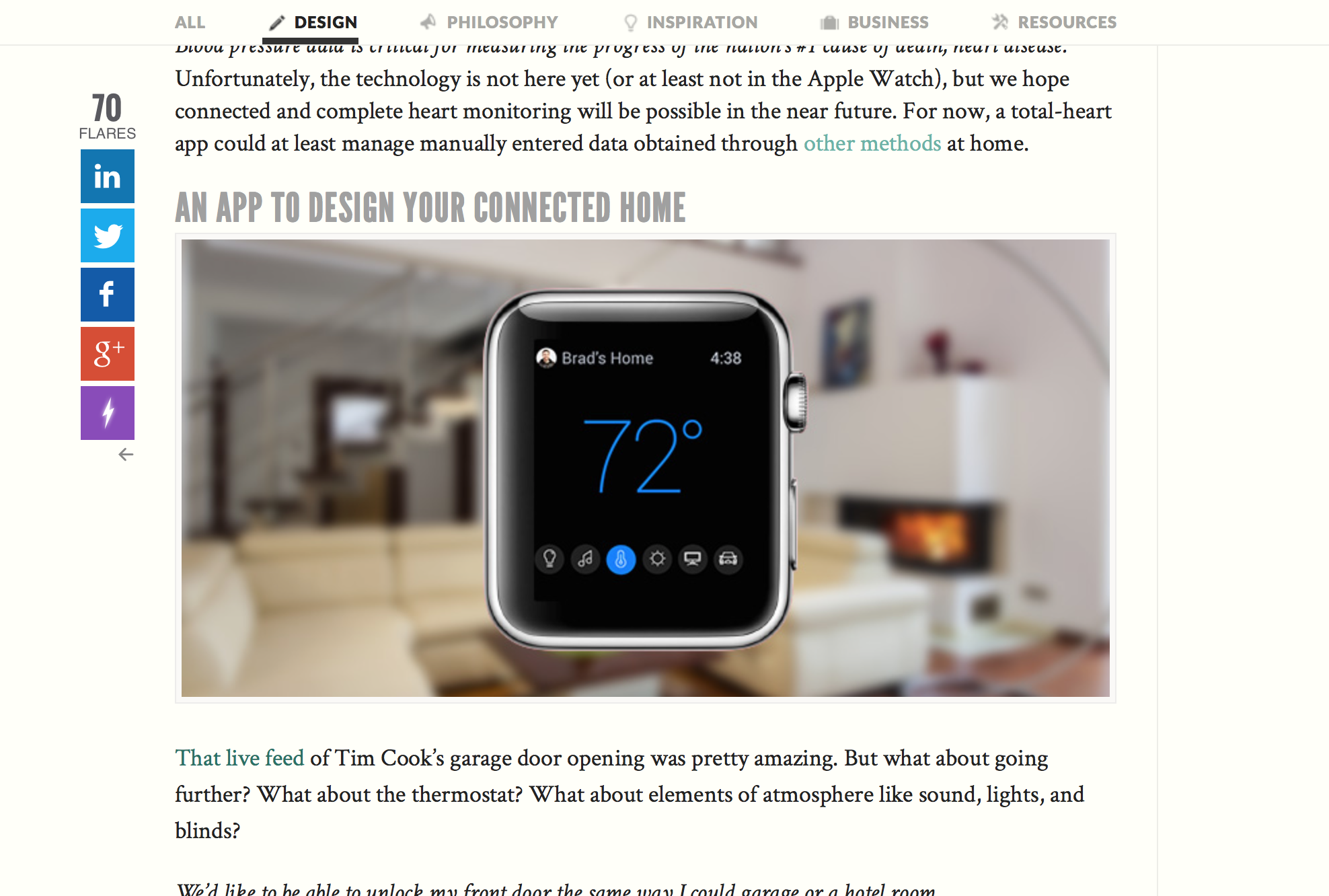
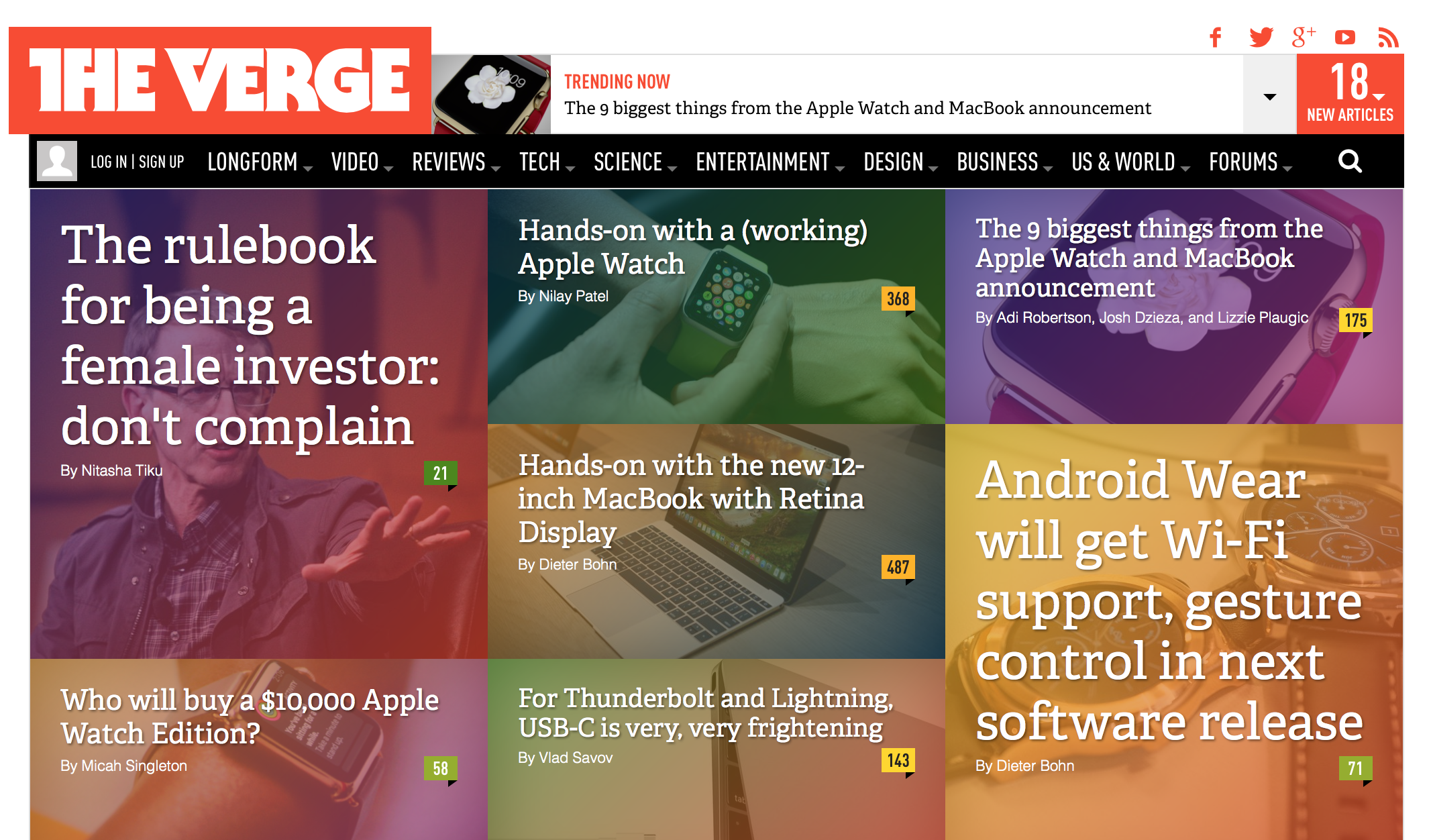
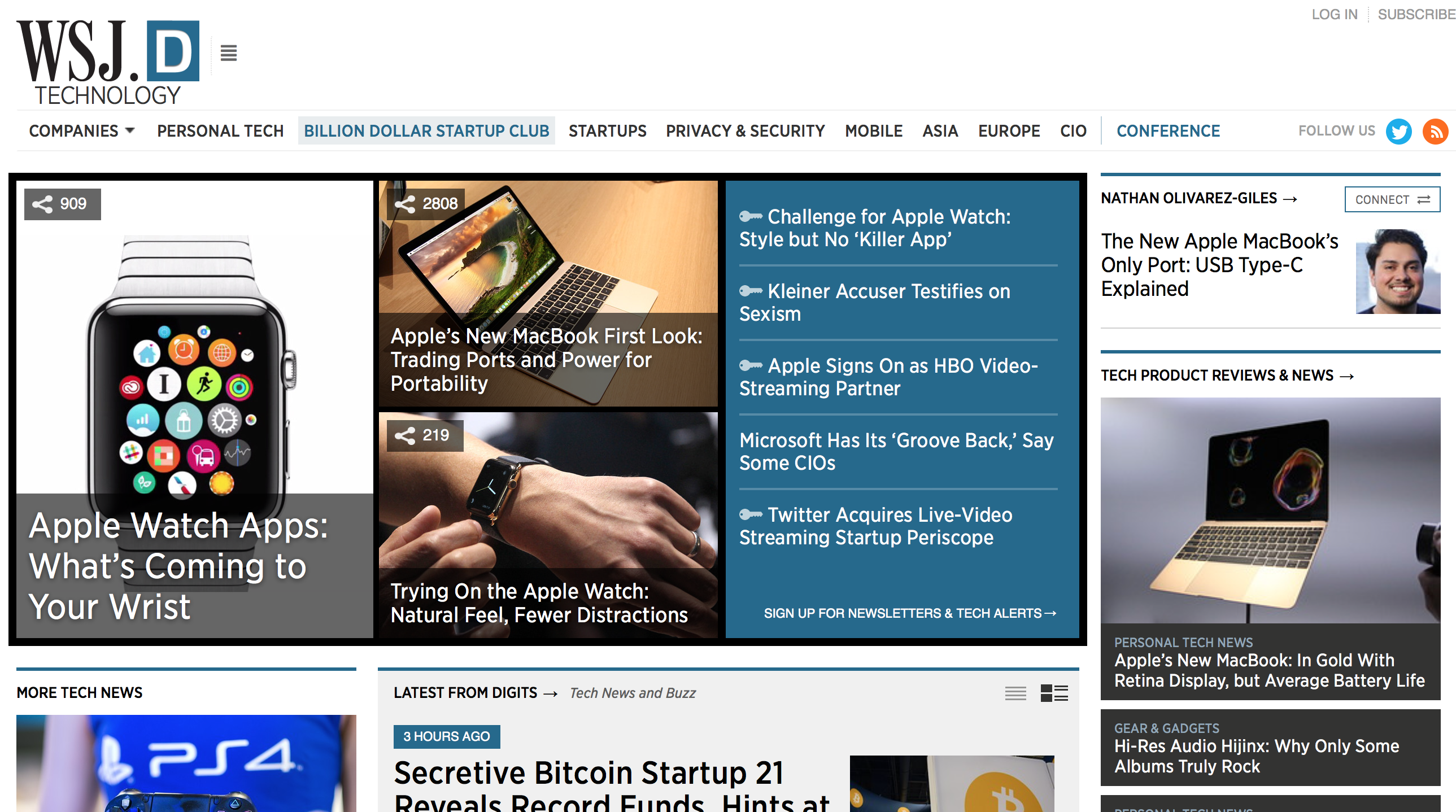
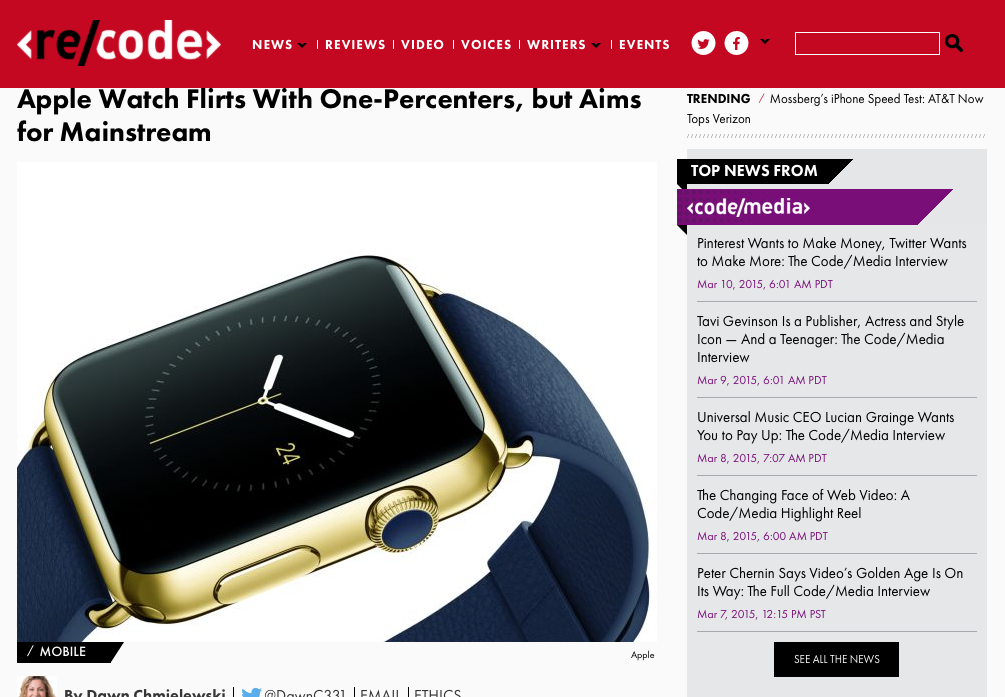
I was reminded of this after Apple’s Watch Keynote last week. They’re obviously Apple, so people will be talking about their new shiny stuff regardless of what photography exists, but just look at how impactful their product shots are:
Microsoft reveals how it will make money giving away software:
Microsoft’s traditional revenue has primarily come from licensing software like Windows and Office to OEMs and businesses. Microsoft grew into the giant it is today thanks to this hugely successful strategy and a dominance of the PC market. With mobile altering the landscape, Microsoft is turning to new strategies for the future of its entire business. Speaking at Microsoft’s Convergence conference today, Chris Caposella, who is in charge of marketing at the software giant, revealed Microsoft’s freemium plans in full.
It involves four parts: acquire, engage, enlist, and monetize. Acquire is Microsoft’s way of getting people to use a product for free, like Office for iPad. Engage is Microsoft’s plan to get them hooked on the product and leverage other parts of its ecosystem to keep someone using the service. Enlist is simply finding fans to keep the circle going, and then monetizing is figuring out who will pay for subscription versions of the service they’re hooked on. It sounds simple, but it’s something Microsoft hasn’t traditionally succeeded at. Google has thrived at offering free services in return for your data or ads, but Microsoft’s approach assumes people are willing to spend money on apps and services they’re addicted to.
Good luck with that strategy.