Android Defectors

That’s where the switching number comes into the picture. This Scenario 2 is shown in the figure above and suggests that although Android gained 8 million new users, it lost 6.4 million to iPhone for a net gain of 1.6.

Apple may have also lost a few users to Android but overall gained switchers from other platforms, mainly Android. This is what would support Tim Cook’s comments.

Thinking further ahead, as the markets mature globally, they may well evolve into the way the US market evolves today. Apple’s brand promise ensures loyalty while competing platforms slowly “leak” users. If this sounds eerily familiar then you’d be right. This is exactly how the PC market behaves today.

The new switchers, Horace Dediu

Categories:

Technology

Tags:

 /  / 

Failing to Fail

What did the men who would be president talk about during last week’s prime-time Republican debate? Well, there were 19 references to God, while the economy rated only 10 mentions. Republicans in Congress have voted dozens of times to repeal all or part of Obamacare, but the candidates only named President Obama’s signature policy nine times over the course of two hours. And energy, another erstwhile G.O.P. favorite, came up only four times.

Strange, isn’t it? The shared premise of everyone on the Republican side is that the Obama years have been a time of policy disaster on every front. Yet the candidates on that stage had almost nothing to say about any of the supposed disaster areas.

And there was a good reason they seemed so tongue-tied: Out there in the real world, none of the disasters their party predicted have actually come to pass. President Obama just keeps failing to fail. And that’s a big problem for the G.O.P. — even bigger than Donald Trump.

G.O.P. Candidates and Obama’s Failure to Fail, Paul Krugman

Categories:

Politics

Tags:

 / 

R.I.P. iTunes

An obituary for iTunes by Adam Clark Estes at Gizmodo:

It was swift and relatively painless. On June 30, 2015, iTunes gave birth to Apple Music, a much-awaited and disappointing pay-to-play streaming service. By this time, iTunes was in poor health, due to the viral popularity of streaming music services. Apple Music, I thought, would bring new life to the tired program. I was wrong.

At first, I welcomed Apple Music’s arrival to the world, realizing that it could make or break iTunes. I hoped iTunes would feel young again, fun again. But the opposite proved true. A few weeks after Apple Music was born, it was apparent that it couldn’t save the addled iTunes.

Well-played.

When you combine iTunes and the Music app on iOS, the situation is almost to the point of being untenable for me.

Does Apple decouple iTunes from Apple Music? Make separate apps for audio and video? I don’t know. All I know is on it’s current trajectory, iTunes (and Music app) is not working.

Categories:

Technology

Windows PC History Repeats Itself

For four years Samsung Electronics Co Ltd has basked in the success of its Galaxy smartphones, making billions of dollars competing with Apple Inc in the premium mobile market.

The coming years are set to be more somber for the South Korean tech giant, as it is forced to slash prices and accept lower margins at its mobile division in order to see off competition from rivals including China’s Huawei Technologies Co Ltd and Xiaomi Inc in the mid-to-low end of the market.

Behind Samsung’s reality-check is the fact it is stuck with the same Android operating system used by its low-cost competitors, who are producing increasingly-capable phones of their own.

Samsung glamour days over as it fights to save mobile market share, Se Young Lee, Reuters

Having Android running on everything from shitty, bottom-of-the-barrel phones to premium devices is great example of democratizing technology: getting it in everyone’s hands, regardless of income. But how do you differentiate your product if you’re an OEM?

You could argue that if Samsung had always just sold premium hardware they might have avoided having to make their current price cuts. The truth is they (and many other OEMs) have always thrown as many price tiers of Android devices to the wall to see what sticks. This has resulted in Android brand doesn’t conjure up thoughts of amazing, premium devices.

It’s as if Ferrari licensed their body panels and frame to other car makers to put whatever engines and electronics they wanted into them. Sure, you could find better/faster Ferrari versions than others but anyone could get a “Ferrari”.

Categories:

Technology

Giving the Finger to Android

Zack Whittaker on Android’s fingerprint vulnerability:

New research, set to be announced at the Black Hat conference in Las Vegas on Wednesday, by FireEye researchers Tao Wei and Yulong Zhang outlined new ways to attack Android devices to extract user fingerprints.

The threat is for now confined mostly to Android devices that have fingerprint sensors, such as Samsung, Huawei, and HTC devices, which by volume remains low compared to iPhone shipments. But down the line by 2019, where it’s believed that at least half of all smartphone shipments will have a fingerprint sensor, the threat deepens.

Of the four attacks outlined by the researchers, one in particular — dubbed the “fingerprint sensor spying attack” — can “remotely harvest fingerprints in a large scale,” Zhang told ZDNet by email.

Open always wins, right?

Categories:

Technology

“This equipment is not supported—AT ALL—by the railroad industry. We are fully, self-sufficient.”

Absolutely incredible.

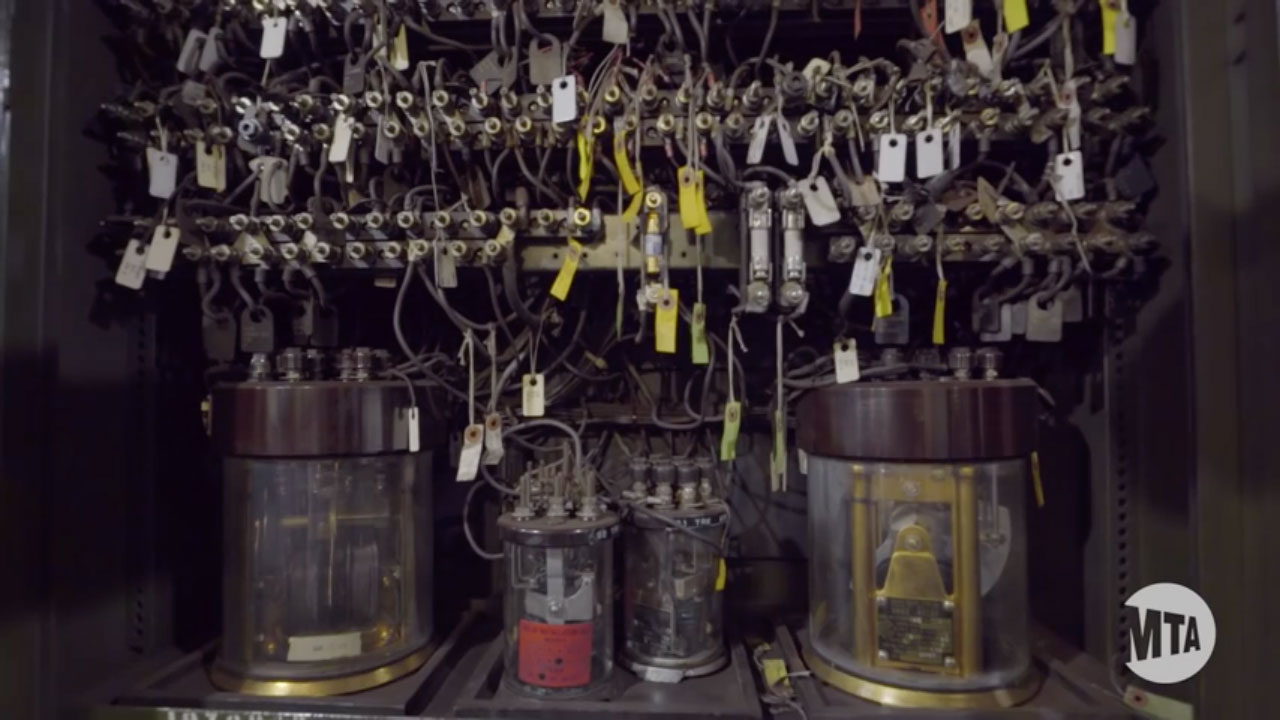
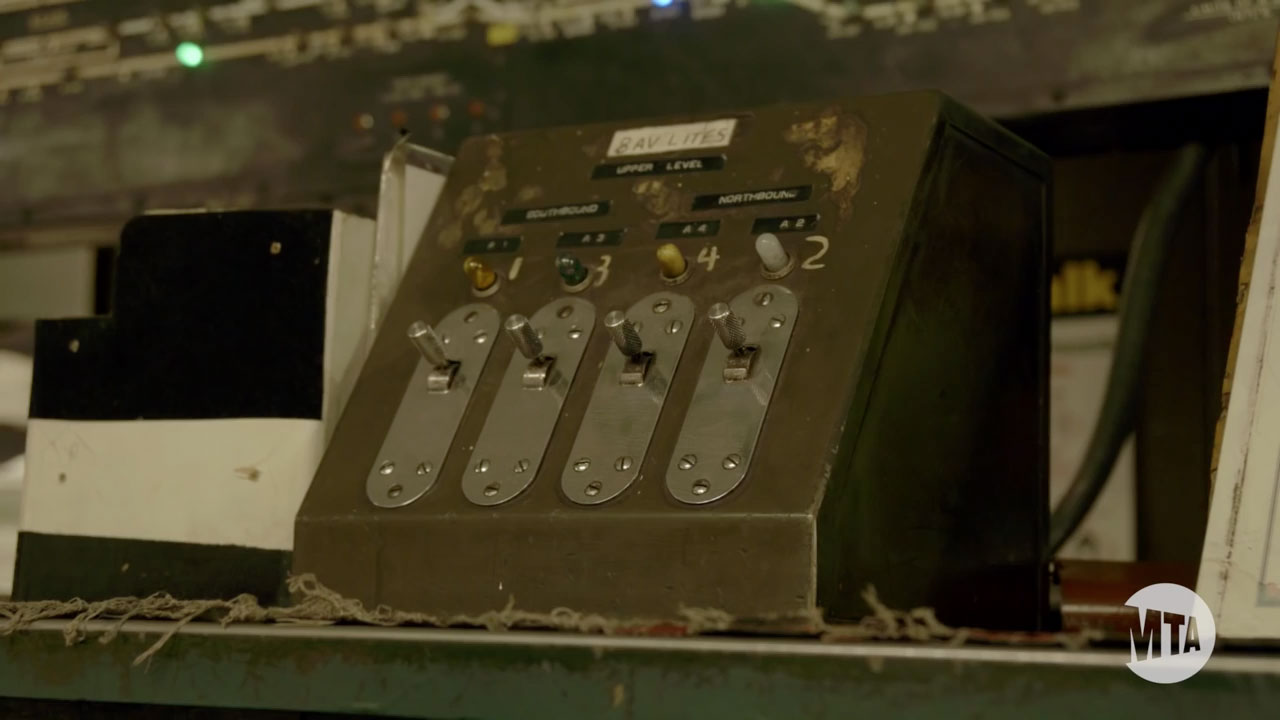
The NYC MTA is upgrading to communications-based train control but the majority of the system still uses electro-mechanical relay switches and other technology from the 1930s to run today’s subway system. And some of the cabling is the original cloth-covered cabling.

Here’s a video on YouTube for a look at this underground system.

Just. Wow.

[As my brother and father were quick to point out both truthfully and comically, there are advantages to this antiquated system: no buggy software upgrades or remote hacking.]

via Laughing Squid

Categories:

Travel

“Three of Apple’s four top products being sold today took roughly 3 years before people were willing to consider it worth buying.”

Abdel Ibrahim on the Apple Watch:

The Apple Watch is experiencing its early days, but I think it’s going to go through a timeline similar to the iPod, the iPhone, and the MacBook Air. This is a whole new frontier for both Apple and the consumer. This is not just technology. This is technology you wear. And because this is all so new to us, it’s simply going to take time for us to fully grasp and accept it.

But that’s not the only reason why. Another reason, and I think the bigger reason, will be because in the years to come innovations will happen that will make the Watch far more compelling. The screen, the battery, the speed, the applications, and the sensors will all become noticeably better. Not only that, but the Watch will likely do things we haven’t thought of yet. It’s hard to say what that is today, but it’s bound to happen.

Like I said, you gotta give it some time.

Categories:

Product

Browser Power Consumption

Interesting web browser results on power consumption:

We measured the power consumption of watching videos on YouTube, browsing Reddit, streaming on Netflix vs Putlocker, creeping on Twitter and FaceBook, composing emails on services like Gmail and Hotmail, and searching for stuff on Google, Bing (yup, surprisingly, it’s still used), and DuckDuckGo. We used a factory-restored MacBook Pro Retina 13” to test each website on one internet browser at a time. No programs other than the browser were open.

Averaging data from all websites tested, Safari won first place with 6hours 21min of total usage, Firefox second with 5hours 29min of usage, and Chrome last with 5hours 8min of usage.

Basically, if you simply switch to using Safari instead of Chrome, on average you could get an extra 1 hour of usage from your battery life. It’s actually a pretty good browser, and now has a fair amount of extensions available.

Not a big deal if you work at a desk all day, but if you’re on the road a lot, what browser you use can make a huge difference.

via Daring Fireball

Categories:

Technology

Apple Watch 1.0

Ever since Slice Intelligence posted their report claiming Apple Watch sales plunged 90% since launch week, doubters in the tech news have been on a feeding frenzy. They’re giddy over the possibility of the Apple Watch being a flop.

Apple isn’t immune to having products that flop, but it’s important to look at the Apple Watch launch in the context of the iPod and iPhone launches. Even conservative estimates put Apple Watch sales at around 2 million units. The original iPhone’s sold 1 million units opening weekend.

One of my favorite blog posts on the topic of Apple products is from Matt Mullenweg (creator of WordPress).

It’s titled, 1.0 is the Loneliest Number:

Many entrepreneurs idolize Steve Jobs. He’s such a perfectionist, they say. Nothing leaves the doors of 1 Infinite Loop in Cupertino without a polish and finish that makes geeks everywhere drool. No compromise!

I like Apple for the opposite reason: they’re not afraid of getting a rudimentary 1.0 out into the world.

I remember my first 1G iPhone. Like a meal you have to wait for, or a line outside a club, the fact that I stood in line for hours made the first time I swiped to unlock the phone that much sweeter. It felt like I was on Star Trek and this was my magical tricorder… a tricorder that constantly dropped calls on AT&T’s network, had a headphone adapter that didn’t fit any of the hundreds of dollars of headphones I owned, ran no applications, had no copy and paste, and was as slow as molasses.

This is where we’re at with Apple Watch. It has a long way to go before it matures into a strong product, but as John Gruber pointed our back in 2010, this is how Apple rolls:

This is how the designers and engineers at Apple roll: They roll. They take something small, simple, and painstakingly well considered. They ruthlessly cut features to derive the absolute minimum core product they can start with. They polish those features to a shiny intensity. At an anticipated media event, Apple reveals this core product as its Next Big Thing, and explains—no, wait, it simply shows—how painstakingly thoughtful and well designed this core product is. The company releases the product for sale.

Then everyone goes back to Cupertino and rolls. As in, they start with a few tightly packed snowballs and then roll them in more snow to pick up mass until they’ve got a snowman. That’s how Apple builds its platforms. It’s a slow and steady process of continuous iterative improvement—so slow, in fact, that the process is easy to overlook if you’re observing it in real time. Only in hindsight is it obvious just how remarkable Apple’s platform development process is.

It the Apple Watch cool? Hell yeah. Does it feel underpowered? Hell yeah. Does it have a lot of potential? Hell yeah.

Think before you speak. Don’t be short-sighted and reactionary.

Give the Apple Watch some time and let’s see where it goes.
Categories:

Product