Problem. Solved.
—Me
—Me
I always enjoy listening to Jony Ive talk.
Eli Schiff has an interesting multi-part series on the “Fall of the Designer”.
Here’s a bit from Part 3, Conformist Responsive Design and the shift away from shiny, roundy, textural UI elements and towards ‘flat’ design:
Similar to web design, application design is becoming homogenized. Where before, apps like Tapbots’ Tweetbot were worlds unto themselves, with robotic sounds and futuristic cartoon aesthetics, today the only remnant of that past is robotic sound effects, devoid of any rationale as to why they sound the way they do.
Paul Haddad of Tapbots seemed to laud the shift, explaining in 2013 that he and his team “talked about making the Mac version a little bit more…plain” too. This hesitation might have invited our skepticism about their approval of flat design. But in the following years, Tapbots announced proudly their newly flattened Tweetbot 2.0 for OS X.
Tapbots is not alone in castrating Calcbot and their Twitter client Tweetbot. The Iconfactory’s Twitteriffic and Twitter’s proprietary iOS app in earlier days all attracted dedicated followings based on expressive designs which each exposed unique feature sets. But with their new flat interfaces, they struggle to differentiate their brands. Even with custom glyphs, animation and functionality, at a 10 foot view, it is difficult to tell one of these flat UIs from the next.
Did these developers suddenly have an epiphany and conclude that their former designs were ugly and overwrought? Or was it instead an imposed, though convenient, ideological shift by operating system designers?
I respect the time and thought Schiff has put into this series on design, and I think the answer to this last question is simple: fashion. UI design, like clothing, goes through different different phases and trends. Thats’ really it.
If you’re afraid skeuomorphism is gone forever, fret not. All you need to do is look at the achievement badges in the new Apple Watch exercise app:

There are gaudy ways of using depth and shading in UI design and there are tasteful ways of using depth and shading just like there tasteful and gaudy ways of using chrome and paint on a car.
I think what we’re seeing, as Schiff has pointed out is not so much flat design as lazy, flat design.
Adam Westbrook explores our distorted view of success and our obsession with youth in his two part video series.
The Long Game Part 1: Why Leonardo DaVinci was no genius (4:25 minutes)
The Long Game Part 2: the missing chapter (5:48 minutes)
via Open Culture
Over at Slate, Jacob Brogan writes about the origin of superheroes not killing:
The industry as a whole didn’t adopt a collective set of standards until 1954, when prominent publishers banded together to form the Comics Code Authority in response to Wertham’s attacks and the congressional hearings they inspired. Long before, however, DC’s prominent characters provided a tacit model for every superhero that would follow. Accordingly numerous other costumed adventurers who refused to kill would appear in the years after Ellsworth laid down the law: Spider-Man wraps thieves up in webbing, the Fantastic Four banish their enemies to the Negative Zone, and Netflix’s Daredevil tosses would-be assassins into dumpsters. By editorial fiat, Ellsworth had effectively imposed a principle that comics storytellers still follow today, three-quarters of a century after the moral panic that inspired it.
If you follow Bryan and I on the Weekly Exhaust podcast, you’ll know Bryan talked about this on episode 34.
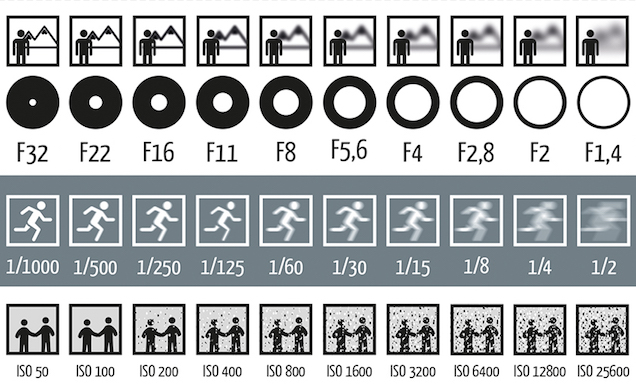
This is a great example of how data visualization and illustration can simplify the understanding of complex ideas:
via Lifehacker
Here are a few of those posters Armin Vit was talking about:


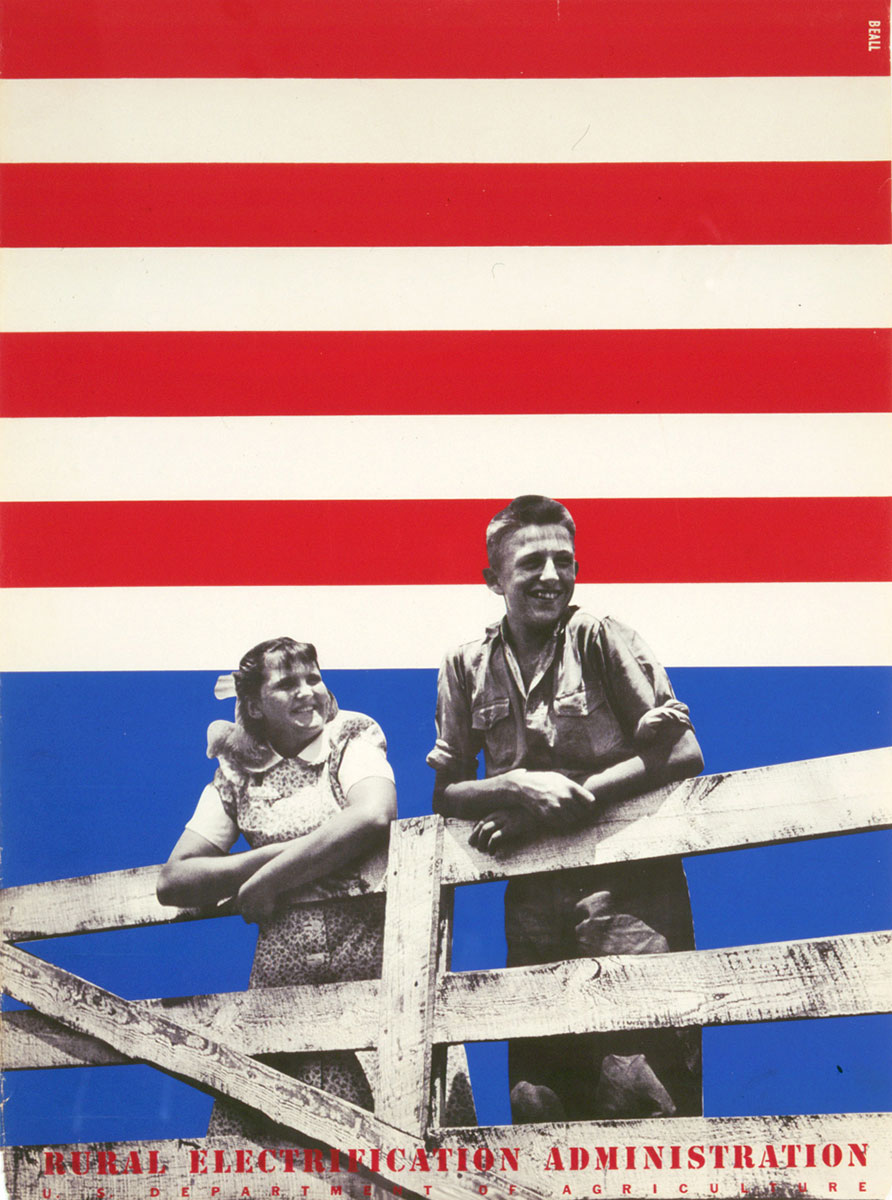
Seemingly simple compositions, but powerful.

Armin Vit on Hillary Clinton’s new campaign identity:
When considering the range of work for the Obama campaign — from Andy Keene’s logo (done as part of Sol Sender’s team), to Scott Thomas’ applications, to Shepard Fairey’s plagiarized poster — we see room for creativity within a managed system. But so far, for Hillary, all I’ve seen are missed opportunities. All the arrow applications are flat and simplistic. A pointing finger rather than a metaphor for progress. A visual tic rather than a passionate call for action.
Vit sees a missed opportunity to take cues from legendary graphic designer Lester Beall:
Which is a shame. Because within those two blue bars and red arrow lies a connection to a powerful and authentic visual language that comes from a pivotal moment in history: Depression America and the WPA.
In 1935, during the depths of the Great Depression, President Franklin Delano Roosevelt used the Emergency Relief Appropriation Act to create the Works Progress Administration, an ambitious agency which employed thousands of unemployed people for numerous infrastructure projects. One of these projects was the Rural Electrification Administration, whose charter was to bring electricity to rural areas that had yet to be wired.
At the time, only 10 percent of rural households had electricity. And while to us electricity is a basic need, in 1935 that concept needed some convincing. Enter Lester Beall, a well-respected New York graphic designer who received the commission to help promote the project.
Image is everything.
Little man, I give the watch to you.
Kevin Ashton is calling bullshit on brainstorming:
Claims about the success of brainstorming rest on easily tested assumptions. One assumption is that groups produce more ideas than individuals. Researchers in Minnesota tested this with scientists and advertising executives from the 3M Company. Half the subjects worked in groups of four. The other half worked alone, and then their results were randomly combined as if they had worked in a group, with duplicate ideas counted only once. In every case, four people working individually generated between 30 to 40 percent more ideas than four people working in a group. Their results were of a higher quality, too: independent judges assessed the work and found that the individuals produced better ideas than the groups.
Follow-up research tested whether larger groups performed any better. In one study, 168 people were either divided into teams of five, seven, or nine or asked to work individually. The research confirmed that working individually is more productive than working in groups. It also showed that productivity decreases as group size increases. The conclusion: “Group brainstorming, over a wide range of group sizes, inhibits rather than facilitates creative thinking.” The groups produced fewer and worse results because they were more likely to get fixated on one idea and because, despite all exhortations to the contrary, some members felt inhibited and refrained from full participation.
I concur with this based on 15 years in the design and advertising industries.
In brainstorming sesssions—as in life—there’s a couple of winners and a whole lot of losers.
Art director Matilda Kahl wears the same thing to work every day:
To state the obvious, a work uniform is not an original idea. There’s a group of people that have embraced this way of dressing for years—they call it a suit. For men, it’s a very common approach, even mandatory in most professions. Nevertheless, I received a lot of mixed reactions for usurping this idea for myself. Immediately, people started asking for a motive behind my new look: “Why do you do this? Is it a bet?” When I get those questions I can’t help but retort, “Have you ever set up a bill for online auto-pay? Did it feel good to have one less thing to deal with every month?”
I’ve started on this path too.
I creative direct and art direct all day. When I get up in the morning the less I have to think creatively about what I wear, the better for my brain.
McSweeney’s gives us sexual euphemisms that won’t catch on.
What makes these so funny for me is that my brain tries to figure out what each phrase could describe.
The reader becomes an active participant in the joke-making process.
via Coudal